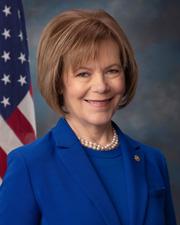
Representative Scorecard
Tina Smith
Tina Smith (D-MN), U.S. Senator, scores 94 (Champion) on the Build the Promise Project 2029 scorecard. Voted with Project 2029 values on 50 of 52 tracked votes. No flagged campaign money found in FEC filings.
Project 2029 Alignment Score
Voted with Project 2029 values on 50 of 52 tracked votes
Voting Record
Vote History
| Vote | Date | Cast | Aligned | Importance |
|---|---|---|---|---|
|
Blocking a crypto bill tied to Trump's profits
Voted no: blocked the crypto bill over Trump's crypto profits.
economy
What this vote meansThis crypto bill would set new rules for digital coins. Democrats blocked it, 49 to 50. They said it lets Trump keep making money from his own crypto business while he writes the rules. A yes vote moved the crypto bill ahead in the Senate. A no vote blocked the crypto bill over Trump's crypto profits. Full details: Digital Asset Market Clarity Act - Senate Cloture Blocked Over Trump Crypto Self-Dealing (H.R. 3633)Motion to invoke cloture on the motion to proceed to the CLARITY Act, a 635-page crypto market structure bill giving the Commodity Futures Trading Commission primary jurisdiction over digital commodities, exempting assets on blockchains the bill deems mature from SEC registration in defined circumstances, amending the Federal Reserve Act to bar Federal Reserve banks from offering products or services directly to individuals, and prohibiting the use of a central bank digital currency for monetary policy. Rejected 49-50, well short of the 60 votes required. Every Democrat present voted nay, 44 of them, joined by Sens. King (I-ME) and Sanders (I-VT) and by Republicans Collins (ME), Hawley (MO), Moran (KS), and Tillis (NC). Sen. Coons (D-DE) was absent. Sen. Tillis, who negotiated the bill's ethics title with Sen. Gallego, voted nay and immediately entered a motion to reconsider, the step that preserves a future cloture vote. Lead author Sen. Cynthia Lummis (R-WY) said Democrats had secured 126 concessions and written more than half the text over a year of daily negotiation, and that the President had twice accepted new ethics restrictions covering himself, the Vice President, federal officeholders, judges, and their spouses. Sen. Elizabeth Warren (D-MA) led the opposition and said the ethics language, released the Sunday night before the vote after negotiation with the White House, was written so that only the Attorney General could enforce it against the President, with an Office of Government Ethics legal opinion able to waive it entirely, while leaving World Liberty Financial and the Trump meme coin untouched and leaving the President free to create new ventures. Warren said Trump and his family took in $1.4 billion from crypto ventures in 2025, more than any publicly traded crypto company in America, while buyers of his meme coins lost close to $4 billion. She also argued the bill would let companies with nothing to do with crypto put assets on a blockchain to escape securities law, let banks deploy deposits into crypto lending and trading, and preempt state and tribal consumer protection enforcement, a provision the president of the Indian Gaming Association called the greatest threat to tribal sovereignty in a generation, and that labor unions opposed it over pension risk. Project 2029 position is nay: crypto markets do need statutory rules, and Democrats have said so. But a framework whose only enforcement against the sitting President runs through his own former criminal defense lawyer, now Attorney General, and can be waived by an ethics office he controls, is a conflict of interest written into permanent law by the person who profits from it. |
Sep 15, 2026 | Nay |
|
|
|
Making voters show photo ID at the polls
Voted no: stopped the photo ID rule, which could keep millions of citizens from voting.
democracy
What this vote meansThis would make voters show a photo ID to get a ballot. Those with no ID would get a backup ballot that counts only if they bring ID in three days. It failed 52-46. About 2.6 million adult citizens have no photo ID at all. A yes vote pushed ahead a rule that every voter must show a photo ID. A no vote stopped the photo ID rule, which could keep millions of citizens from voting. Full details: Federal Photo Voter ID - Husted Bill Cloture Fails Before Recess (S. 5271)Senate cloture vote on the motion to proceed to S. 5271, a bill by Sen. Jon Husted (R-OH) to amend the Help America Vote Act so that election officials could not hand an in-person federal ballot to any voter without a valid physical photo ID. Voters lacking ID could cast only a provisional ballot, and it would count only if they returned with photo ID within three days or signed an affidavit citing a religious objection to being photographed; mail voters would have to enclose a copy of their ID or their last four Social Security digits plus an affidavit. Introduced August 5 and forced to the floor three days later in a pre-dawn vote at the end of the marathon session before the August recess, it was a rerun of the March SAVE America Act cloture fight, engineered to put Democrats on record against voter ID before the midterms - and to give Husted, locked in a competitive race with Sherrod Brown, a campaign talking point. Cloture failed 52-46, short of the 60 votes needed: every Republican voted yea, every Democrat and Independent voted nay, with McConnell and Welch not voting. Project 2029 position is nay: a 2023 national survey by the Brennan Center, VoteRiders, and the University of Maryland found roughly 2.6 million adult citizens hold no government photo ID at all, while in-person impersonation fraud - the only thing a photo ID requirement can stop - occurs at rates between 0.0003 and 0.0025 percent. A federal photo ID mandate solves a problem that does not exist by shrinking the electorate among elderly, low-income, Black, Latino, and young voters. |
Aug 8, 2026 | Nay |
|
|
|
Trump's own lawyer to run the Justice Department
Voted no: tried to keep Trump's own lawyer from running the Justice Department.
democracy
What this vote meansTodd Blanche was Trump's own lawyer in his criminal cases. The Senate made him Attorney General by one vote, 50-49. That is the nation's top law job. He won the last vote he needed by dropping a $1.8 billion fund to pay Trump's allies. A yes vote put Trump's own defense lawyer in charge of the Justice Department. A no vote tried to keep Trump's own lawyer from running the Justice Department. Full details: Todd Blanche - Attorney General ConfirmationConfirmation of Todd Blanche, Trump's lead criminal defense lawyer in the Manhattan hush money trial and the federal cases, as Attorney General. Confirmed 50-49 at 4:17 a.m. on August 8 in an overnight session before the recess. The post opened when Trump fired Pam Bondi on April 2, reportedly frustrated that prosecutions of James Comey and Letitia James had collapsed and by her handling of the Epstein files; Blanche, then Deputy Attorney General, became acting AG. Sens. Collins and Murkowski were the only Republican nays. Collins said the Department 'has become increasingly political' and that Blanche 'has taken several actions that have further eroded the Department's independence'; Murkowski said the country needs an Attorney General 'who will check the worst impulses of this administration' and 'I simply do not have confidence that will be the case.' Sen. Cassidy supplied the deciding vote after Blanche rescinded a $1.8 billion 'Anti-Weaponization Fund' that would have paid January 6 defendants and Trump allies claiming persecution, and withdrew tax-audit immunity for Trump and his family. Sen. Durbin: 'If there is ever a moment in history when we need an Attorney General above reproach... it's right now.' Project 2029 position is nay: Chapters 17 and 28 exist because the Justice Department was turned into an instrument of the President's personal grievances. Confirming the President's own defense attorney to run it, after he signed off on a fund to compensate the President's allies, does not restore independence. It makes the capture permanent. |
Aug 8, 2026 | Nay |
|
|
|
Putting Erica Schwartz in charge of the CDC
Voted no: tried to keep Erica Schwartz out of the top CDC job.
healthcare
What this vote meansErica Schwartz is a retired public health doctor. The Senate made her head of the CDC, 51-44. She says she believes in vaccines. But she would not promise to stand up to her boss, Robert Kennedy Jr., who fired the last CDC chief over vaccines. A yes vote put Erica Schwartz in charge of the CDC. A no vote tried to keep Erica Schwartz out of the top CDC job. Full details: Erica Schwartz - CDC Director ConfirmationConfirmation of Dr. Erica Schwartz, a retired Public Health Service rear admiral and deputy surgeon general in the first Trump administration, as Director of the Centers for Disease Control and Prevention. Confirmed 51-44. The CDC had gone nearly a year without a confirmed director after HHS Secretary Robert F. Kennedy Jr. fired Susan Monarez in August 2025, 29 days into the job, when she refused to pre-approve his vaccine policy changes. Schwartz told the HELP Committee 'I believe in vaccines,' called mRNA technology safe and effective, and pledged 'I will never betray the science,' but did not commit to independence from Kennedy and said she was unaware of some of his changes to the childhood schedule. Chairman Cassidy said the agency needs a director 'that will actually stand up to crazy, stupid things.' The American Public Health Association backed her; the National Public Health Coalition of former CDC employees said her commitments were 'incomplete, vague, or missing.' Sen. Kaine (D-VA) was the lone Democratic yea, saying he regretted his vote against Monarez. Project 2029 position is nay: Chapter 14 is built on restoring a CDC whose guidance is set by evidence rather than the Secretary's beliefs. The last director who tried was fired within a month, and a nominee who would not say she would resist the same pressure offers no assurance the next one will fare differently. |
Aug 5, 2026 | Nay |
|
|
|
Firms must say what forever chemicals they made
Voted yes: ended the delay, so firms would have to report these chemicals now.
environment
What this vote meansCompanies must tell the EPA about the 'forever chemicals' they have made since 2011. These chemicals are linked to cancer. Trump's EPA put off that deadline for a third time. This vote would have ended the delay, but it failed 48-50. A yes vote ended the delay, so firms would have to report these chemicals now. A no vote kept the delay, so firms do not have to report these chemicals yet. Full details: PFAS Reporting Delay - CRA to Restore the Forever Chemicals Disclosure Deadline (S.J.Res. 187)Senate vote on the motion to proceed to Sen. Sheldon Whitehouse's Congressional Review Act resolution overturning an EPA rule that delayed, for the third time, the start of PFAS reporting under Section 8(a)(7) of the Toxic Substances Control Act. The underlying 2023 rule, mandated by Congress in the FY2020 defense authorization, requires every company that has manufactured or imported PFAS 'forever chemicals' since 2011 to tell EPA what they made, how much, how it was used and disposed of, and what they know about exposures and hazards - the first comprehensive national inventory of roughly 1,000 PFAS compounds linked to cancers, kidney and liver disease, hormone disruption, and developmental harm. The reporting window was originally to open in November 2024. Trump's EPA published the latest delay on April 13, 2026, the very day the window was finally scheduled to open, pushing the start to January 31, 2027 or 60 days after EPA finalizes a separate rule narrowing what must be reported, whichever comes first. The motion failed 48-50: all 45 Democrats and both Independents voted to restore the deadline, joined by Sen. Susan Collins (R-ME) as the lone Republican; 50 Republicans voted to preserve the delay, with Blackburn and McConnell not voting. The U.S. Chamber of Commerce opposed the resolution and the White House threatened a veto. Project 2029 position is yea: communities cannot clean up contamination they are not allowed to know about. Delaying disclosure while simultaneously rewriting the rule to add exemptions is the chemical industry's preferred outcome delivered by administrative slow-walk rather than by any vote of Congress. |
Aug 5, 2026 | Yea |
|
|
|
Ending the Iran war, one vote short again
Voted yes: tried to force the Senate to vote on ending the Iran war.
security
What this vote meansThis would have forced a Senate vote to end the Iran war. It failed 49-50, just one vote short. Three Republicans voted yes, but one Democrat, Fetterman, voted no. Since February, 18 U.S. troops have been killed and more than 600 wounded. A yes vote tried to force the Senate to vote on ending the Iran war. A no vote kept the Iran war going with no vote from Congress. Full details: Iran War Powers Resolution - Senate 13th Vote, One Short Again (S.J.Res. 181)Motion to discharge S.J.Res. 181, directing the removal of U.S. Armed Forces from unauthorized hostilities against Iran. Introduced by Sen. Kirsten Gillibrand (D-NY). Rejected 49-50 on July 30 - one vote short, with Sen. McConnell absent. Republicans Collins, Murkowski, and Paul voted yea; Sen. Cassidy voted nay again; Sen. Fetterman (D-PA) was once more the lone Democratic nay and the decisive vote. Two days earlier Iran had fired ballistic missiles at U.S. forces in the region, and Central Command answered with what it called a 'heavy wave of strikes.' Eighteen U.S. service members had been killed and more than 600 wounded since February. Collins said 'the President's authority as Commander-in-Chief is not without limits.' Gillibrand: 'Under the Constitution, we have the power to end this war today. Let's use it.' Project 2029 position is yea: for the second time this year the Senate fell exactly one vote short of a majority to end the war, and the same senator supplied the margin both times. Five months in, with the ceasefire gone and casualties mounting, every recorded nay is a vote to keep an unauthorized war going. |
Jul 30, 2026 | Yea |
|
|
|
Keeping a cap on child care costs
Voted yes: would have brought back the cap on child care costs for low-income families.
economy
What this vote meansTrump's team ended a rule that kept child care costs for low-income families under 7 percent of their pay. This vote would have brought the cap back. It failed 47-52, with every Republican voting no. Some families could pay thousands more each year. A yes vote would have brought back the cap on child care costs for low-income families. A no vote kept Trump's rule, which lets child care costs rise for low-income families. Full details: Child Care Copay Cap Repeal - CRA to Restore the 7 Percent Limit Blocked (S.J.Res. 199)Senate vote on the motion to proceed to Sen. Patty Murray's Congressional Review Act resolution overturning the Trump HHS rule 'Restoring Flexibility in the Child Care and Development Fund,' finalized in May 2026. The rule rescinds the 2024 CCDF rule's core protections for the roughly one million low-income families who receive federal child care subsidies: the cap limiting family copayments to 7 percent of household income, the requirement that states pay providers prospectively and by enrollment rather than by attendance so that providers can keep their doors open, and the requirement that states use grants and contracts to build supply for infants and toddlers, children with disabilities, and underserved areas. The Center for American Progress estimated that families in states without their own copay caps could pay from $450 to more than $15,000 a year more. The White House called the 2024 protections 'dangerous Biden-era mandates' and threatened a veto. The motion failed 47-52 on a straight party-line vote: all 45 Democrats and both Independents voted to overturn the rule, all 52 voting Republicans voted to keep it, with McConnell not voting. Murray's framing on the floor: 'You are either voting to lower child care costs or to increase them.' Project 2029 position is yea: at a moment when child care averages more than $13,000 a year per child, stripping the copay cap and the enrollment-based payment rule is a direct transfer of costs onto working parents and a destabilizer for the providers who serve them, dressed up as 'state flexibility.' |
Jul 30, 2026 | Yea |
|
|
|
Putting Jay Clayton in charge of U.S. intelligence
Voted no: tried to keep Jay Clayton out of the top U.S. intelligence job.
security
What this vote meansJay Clayton worked for Trump before and is now a prosecutor. The Senate made him the top U.S. intelligence chief, 51-47. At his hearing, he would not say Joe Biden won the 2020 election. Critics fear he will not stand up to political pressure. A yes vote put Jay Clayton in charge of U.S. intelligence. A no vote tried to keep Jay Clayton out of the top U.S. intelligence job. Full details: Jay Clayton - Director of National Intelligence ConfirmationConfirmation of Jay Clayton, the U.S. Attorney for the Southern District of New York and Trump's first-term SEC chairman, as Director of National Intelligence. Confirmed 51-47 on a party-line vote. The post opened when Tulsi Gabbard resigned in May citing her husband's cancer diagnosis; Trump then installed Federal Housing Finance Agency director Bill Pulte, a loyalist with no intelligence experience, as acting DNI in June, and Pulte announced staff cuts of roughly 30 percent at the office. At his July 15 hearing Clayton refused to say Joe Biden won the 2020 election, offering only that Biden was 'certified,' and Intelligence Vice Chair Mark Warner came away with 'serious reservations about whether he would be willing to stand up to political pressure when it matters most.' Sen. Wyden pressed him on subpoenas his office issued to New York Times journalists over reporting on the Qatari-donated Air Force One and later alleged he gave false testimony about them. Section 702 surveillance authority remained lapsed through the confirmation. Project 2029 position is nay: Chapter 7 rests on an intelligence community that reports facts the President does not want to hear. A DNI who will not state a settled fact about an American election, taking over the intelligence community in the middle of an unauthorized war, is the wrong person to guarantee that. |
Jul 28, 2026 | Nay |
|
|
|
Ending the Iran war as fighting starts again
Voted yes: moved to force a Senate vote on ending the Iran war.
security
What this vote meansThis would have forced a Senate vote to end the Iran war. It failed 47-49, with just one Republican voting yes. It was the first try since the ceasefire fell apart and strikes resumed. That week four U.S. troops died and gas hit $4. A yes vote moved to force a Senate vote on ending the Iran war. A no vote kept the Senate from even voting on ending the Iran war. Full details: Iran War Powers Resolution - Senate 12th Vote, After the Ceasefire Collapse (S.J.Res. 180)Motion to discharge S.J.Res. 180, directing the removal of U.S. Armed Forces from unauthorized hostilities against Iran. Introduced by Sen. Chris Van Hollen (D-MD). Rejected 47-49 on July 23 - the first Senate war powers vote after the ceasefire collapsed and U.S. strikes resumed. That weekend three U.S. troops were killed in an Iranian attack on a base in Jordan and a fourth died in Iraq; oil passed $100 a barrel and gas hit $4. Sen. Collins was the only Republican yea. Sens. Paul and Murkowski, both prior supporters, were absent along with McConnell and Britt, and Sen. Cassidy voted nay, saying an 'immediate' withdrawal would not be 'reasonable.' Sen. Fetterman (D-PA) was again the lone Democratic nay. The House adopted a parallel nonbinding resolution (H.Con.Res. 89) 214-208 the same day. Van Hollen called the war 'a strategic blunder on a massive scale.' Project 2029 position is yea: Congress directed an end to this war in June, the President ignored it, and the fighting escalated. A binding joint resolution is the only instrument left, and a chamber that will not even discharge it from committee is choosing not to act. |
Jul 23, 2026 | Yea |
|
|
|
Ending the AI test that denies Medicare care
Voted yes: would have ended the AI test that can deny care in Medicare.
healthcare
What this vote meansTrump's team is testing AI that can deny care in Medicare in six states. This vote would have stopped that. It failed 46-50, with every Republican voting no. Backers say a doctor, not a machine, should decide your care. A yes vote would have ended the AI test that can deny care in Medicare. A no vote kept the AI test that can deny Medicare care going. Full details: Medicare AI Prior Authorization - CRA Repeal Blocked (S.J.Res. 198)Motion to proceed to a Congressional Review Act resolution overturning the CMS 'WISeR' model, which since January 2026 has piloted AI-driven prior authorization in traditional Medicare across six states (NJ, OH, OK, TX, AZ, WA). Led by Sen. Kirsten Gillibrand (D-NY). Rejected 46-50 on a straight party-line vote - every Democrat and Independent for repeal, every Republican against - so the AI denial pilot continues. Project 2029 position is yea: traditional Medicare's core promise is that a doctor's judgment, not an insurance algorithm, decides care. Importing Medicare Advantage's worst feature - automated denial machinery - into original Medicare breaks that promise for the sickest patients. |
Jul 16, 2026 | Yea |
|
|
|
Blocking the defense bill over the Iran war
Voted no: held up the defense bill, since Congress never backed the Iran war.
security
What this vote meansThis vote would have moved a $1.5 trillion defense bill forward. It failed 50-46. Every Democrat voted no. They said Congress should not fund a war in Iran that it never approved, and they wanted hearings on troops sent to U.S. cities. A yes vote would have let the $1.5 trillion defense bill move ahead in the Senate. A no vote held up the defense bill, since Congress never backed the Iran war. Full details: FY2027 NDAA Blocked Over Unauthorized Iran War (S. 4784)Cloture on the motion to proceed to the FY2027 National Defense Authorization Act rejected 50-46 - every Democrat and both Independents voting no, threatening the NDAA's unbroken passage streak since 1961. Democrats blocked the roughly $1.5 trillion defense topline over the administration's refusal to seek authorization for the Iran war, demands by Sen. Duckworth for hearings on domestic military deployments to American cities, and a shut-down amendment process. Leader Thune voted nay only to preserve reconsideration. Project 2029 position is nay: Congress's power of the purse is its last effective check on an undeclared war. Refusing to authorize a record defense budget while the administration ignores a war powers directive from both chambers is that check being used. |
Jul 14, 2026 | Nay |
|
|
|
Ending the Iran war: Cassidy flips, bill dies
Voted yes: kept alive the one measure with legal power to end the Iran war.
security
What this vote meansThe Senate had just voted to end the Iran war. But that version had no legal force. This vote was on the version that could become law, and it failed 47 to 50. Bill Cassidy switched to no after a White House meeting, killing it. A yes vote kept alive the one measure with legal power to end the Iran war. A no vote killed the only measure that could legally force Trump to end the war. Full details: Iran War Powers - The Cassidy Reversal (S.J.Res. 185 Motion to Proceed)One day after the Senate passed H.Con.Res. 86, it refused 47-50 to proceed to S.J.Res. 185 - the binding joint resolution version that would actually reach the President's desk. Sen. Bill Cassidy (R-LA), who had voted for the measure on May 19, flipped to nay after a White House briefing by Vice President Vance and envoy Steve Witkoff; Sen. Rand Paul voted present. The reversal killed the only vehicle with legal force, one the White House had already threatened to veto. Project 2029 position is yea: a concurrent resolution the White House dismisses as non-binding plus a blocked joint resolution equals a war Congress has voted against but cannot stop - which is exactly why this procedural vote mattered as much as the historic one the day before. |
Jun 24, 2026 | Yea |
|
|
|
Ending the Iran war: House and Senate agree
Voted yes: told Trump to pull the troops out of the Iran war.
security
What this vote meansThis measure told Trump to end the Iran war. The Senate passed it 50 to 48, as the House had. Never before had both houses voted to stop a war still going on. The White House refused to obey and kept fighting. A yes vote told Trump to pull the troops out of the Iran war. A no vote let Trump keep the war going without a yes from Congress. Full details: Iran War Powers Resolution - Senate Passage, Historic First (H.Con.Res. 86)The Senate agreed 50-48 to H.Con.Res. 86, directing the President to remove U.S. Armed Forces from hostilities with Iran - making it the first war powers resolution directing an end to an ongoing war ever adopted by both chambers of Congress. Republicans Cassidy, Collins, Murkowski, and Paul voted yea; Sen. Fetterman (D-PA) was the lone Democratic nay. The White House declared the concurrent resolution an unconstitutional legislative veto that 'will not reach' the President's desk, and did not remove forces; the ceasefire collapsed July 8 and strikes resumed. Project 2029 position is yea: both chambers of Congress have now formally directed an end to this war. An executive that ignores that directive is not debating war powers - it is nullifying them. |
Jun 23, 2026 | Yea |
|
|
|
Building more homes: the Senate votes yes
Voted yes: helped build more homes and kept Wall Street from buying up houses.
housing
What this vote meansThis law helps build more homes. It funds affordable housing and helps small banks lend. It also bars big investors that own 350 or more houses from buying more. The Senate passed it 85 to 5, and it became law in July without Trump's signature. A yes vote helped build more homes and kept Wall Street from buying up houses. A no vote stood against the housing law and its limits on big investors. Full details: Housing Supply - 21st Century ROAD to Housing Act - Senate Final Passage (H.R. 6644)Final Senate action (motion to concur, 85-5) on the most significant housing supply legislation in decades: expanded affordable-housing financing, streamlined environmental review for housing, manufactured-housing reform, a new community-bank housing lending title, and a bar on large institutional investors (350+ single-family homes) buying up additional single-family homes. Only five Republicans opposed: Johnson (WI), Lee, Paul, Scott (FL), Tuberville. Became law July 11, 2026 without the President's signature. Project 2029 position is yea: the housing shortage is a supply crisis, and this is the rare bill that attacks it from every angle - including finally curbing Wall Street's bulk purchase of family homes. |
Jun 22, 2026 | Yea |
|
|
|
Ending the Iran war: Senate's ninth try fails
Voted yes: moved to end the war with Iran and pull the troops out.
security
What this vote meansThis measure told Trump to pull the troops out of the Iran war. The ninth Senate try failed, 47 to 48. The same four Republicans voted yes, and John Fetterman again voted no. Each vote shows where every senator stands on this war. A yes vote moved to end the war with Iran and pull the troops out. A no vote let the war with Iran go on without approval from Congress. Full details: Iran War Powers Resolution - Senate 9th Vote (S.J.Res. 172)Motion to discharge S.J.Res. 172, directing the removal of U.S. Armed Forces from unauthorized hostilities against Iran. Introduced by Sen. Raphael Warnock (D-GA). Rejected 47-48. The four Republican supporters held (Cassidy, Collins, Murkowski, Paul) and Sen. Fetterman (D-PA) remained the lone Democratic nay; absences on both sides narrowed the margin. Project 2029 position is yea: each of these votes is a named, recorded answer to one question - does Congress authorize this war? A senator who keeps answering 'don't ask' is answering. |
Jun 16, 2026 | Yea |
|
|
|
Giving ICE $70 billion with no new rules
Voted no: said no to $70 billion for ICE without new rules for its officers.
immigration
What this vote meansThis gives ICE and Border Patrol $70 billion through 2029. It pays for 100,000 beds to lock people up and a goal of 1 million deportations a year. It adds no body camera or conduct rules. It passed 52-47, with no Democrat voting yes. A yes vote gave ICE $70 billion to lock up and deport more people, with no new rules. A no vote said no to $70 billion for ICE without new rules for its officers. Full details: Secure America Act - $70 Billion ICE Expansion - Senate Passage (S. 2)Budget reconciliation bill appropriating roughly $70 billion for immigration enforcement through September 2029: $38.5 billion for ICE (expansion to 100,000 detention beds, including converted warehouses, and a target of 1 million removals per year), $22.6 billion for Border Patrol hiring, $3.5 billion for surveillance technology, and $5 billion in flexible DHS funds - with no officer-conduct safeguards, body camera requirements, or due process reforms. Passed 52-47 after a two-day vote-a-rama; Sen. Murkowski (R-AK) was the only Republican to vote nay and no Democrat voted yea. Republicans used reconciliation to bypass the Democratic filibuster that had held through a 76-day DHS shutdown, after Democrats demanded accountability reforms following the killing of two U.S. citizens during ICE's Operation Metro Surge in Minneapolis. Project 2029 position is nay: this is a blank check for a mass deportation infrastructure - detention camps, quota-driven removals, and militarized communities - explicitly stripped of every safeguard Democrats asked for. |
Jun 5, 2026 | Nay |
|
|
|
Ending the Iran war: first Senate win
Voted yes: moved the Senate closer to ending the war with Iran.
security
What this vote meansThis measure told Trump to pull the troops out of the Iran war. On the eighth try, it won a Senate vote, 50 to 47. Four Republicans joined all Democrats but Fetterman. Senate leader Thune then let it sit five weeks with no final vote. A yes vote moved the Senate closer to ending the war with Iran. A no vote let the war with Iran go on without approval from Congress. Full details: Iran War Powers - First Senate Majority (S.J.Res. 185 Motion to Discharge)Motion to discharge S.J.Res. 185, directing the removal of U.S. Armed Forces from unauthorized hostilities against Iran. Introduced by Sen. Tim Kaine (D-VA). Agreed to 50-47 - the first time an Iran war powers measure won a Senate majority, on the eighth attempt. Four Republicans voted yea: Paul, Collins, Murkowski, and Cassidy (new). Sen. Fetterman (D-PA) remained the lone Democratic nay. Majority Leader Thune then let the resolution sit on the calendar for five weeks without floor time. Project 2029 position is yea: this vote proved a bipartisan Senate majority opposed the undeclared war - and that leadership scheduling, not the will of the chamber, was what kept it alive. |
May 19, 2026 | Yea |
|
|
|
Trump's pick to run the Federal Reserve
Voted no: tried to keep Trump's pick from running the Federal Reserve.
economy
What this vote meansThe Senate put Kevin Warsh in charge of the Federal Reserve, which sets interest rates. The vote was 54 to 45. Only one Democrat, John Fetterman, voted yes. Trump expects Warsh to cut rates, and critics say he will do what the White House wants. A yes vote put Kevin Warsh in charge of the Federal Reserve. A no vote tried to keep Trump's pick from running the Federal Reserve. Full details: Kevin Warsh - Federal Reserve Chair ConfirmationConfirmation of Kevin Warsh as Chairman of the Federal Reserve, replacing Jerome Powell at the end of his term. Confirmed 54-45 - the closest and most partisan Fed chair confirmation in modern history. Every Republican voted yea; Sen. Fetterman (D-PA) was the only Democrat to join them. Trump had spent years attacking Powell and openly expects Warsh to cut rates; a DOJ investigation of Powell was dropped in April 2026, clearing the path. At his hearing, Sen. Warren called Warsh a 'sock puppet' for the White House, noting he advocated rate hikes under Biden and flipped to advocating cuts under Trump. Project 2029 position is nay: an independent central bank is a load-bearing wall of both economic stability and democratic government. Installing a chair selected for his willingness to deliver the White House's preferred rates - after a pressure campaign against his predecessor - is exactly the politicization of the Fed that Project 2029 Chapter 24 warns against. |
May 13, 2026 | Nay |
|
|
|
Ending the Iran war: Senate falls one short
Voted yes: moved to end the war with Iran and pull the troops out.
security
What this vote meansThree months into the Iran war, this measure told Trump to pull the troops out. It lost by one vote, 49 to 50. Lisa Murkowski became the third Republican voting yes. John Fetterman was again the lone Democrat voting no, and that sank it. A yes vote moved to end the war with Iran and pull the troops out. A no vote let the war with Iran go on without approval from Congress. Full details: Iran War Powers Resolution - Senate 7th Vote, Murkowski Joins (S.J.Res. 163)Motion to discharge S.J.Res. 163, directing the removal of U.S. Armed Forces from unauthorized hostilities against Iran. Introduced by Sen. Jeff Merkley (D-OR). Rejected 49-50 - one vote short. The seventh Senate attempt to rein in the Iran war. Sen. Lisa Murkowski (R-AK) joined Paul and Collins as a new Republican yea, citing the administration's refusal to provide 'clarity' after the 60-day War Powers window passed. Sen. Fetterman (D-PA) was once again the lone Democratic nay - the decisive defection. Project 2029 position is yea: three months into an undeclared war, Congress voting to enforce its own constitutional war powers should not fail by a single vote. |
May 13, 2026 | Yea |
|
|
|
Ending the Iran war: vote at the deadline
Voted yes: moved to end the war with Iran as the legal clock ran out.
security
What this vote meansThis measure told Trump to pull the troops out of the Iran war. The Senate said no, 47 to 50, one day before a 60-day deadline. The White House claimed a ceasefire stopped that clock. The clock exists so no president can wage war forever. A yes vote moved to end the war with Iran as the legal clock ran out. A no vote let the war with Iran go on past the deadline. Full details: Iran War Powers Resolution - Senate 6th Vote at the 60-Day Deadline (S.J.Res. 184)Motion to discharge S.J.Res. 184, directing the removal of U.S. Armed Forces from unauthorized hostilities against Iran. Introduced by Sen. Adam Schiff (D-CA). Rejected 47-50 on April 30 - the day before the disputed 60-day War Powers Resolution deadline for the war launched February 28. The administration claimed the April 8 ceasefire 'terminated hostilities' and stopped the 60-day clock; Democrats disputed this. Sens. Collins and Paul were the only Republicans to vote yea; Sen. Fetterman (D-PA) was again the only Democrat to vote nay. Project 2029 position is yea: the 60-day clock exists precisely so a President cannot wage an undeclared war indefinitely. Letting the deadline pass without a vote to enforce it hollows out the War Powers Resolution itself. |
Apr 30, 2026 | Yea |
|
|
|
Billions more for ICE to deport people
Voted no: tried to block the extra money for ICE and deportations.
immigration
What this vote meansThis budget plan adds up to $70 billion for ICE and Border Patrol. It passed 50 to 48, with only two Republicans voting no. The money would lock up and deport far more people. It also lets the spending pass with no Democratic votes. A yes vote backed up to $70 billion more for ICE and deportations. A no vote tried to block the extra money for ICE and deportations. Full details: ICE/DHS Reconciliation Budget Resolution (S.Con.Res. 33)FY2026 budget resolution with reconciliation instructions directing the Homeland Security and Judiciary committees to approve up to $70 billion in new spending for immigration enforcement, specifically ICE and Border Patrol. Passed 50-48 after an all-night vote-a-rama marathon. Provides a filibuster-proof path to massively expand detention, deportation operations, and border enforcement without Democratic votes. Sens. Lisa Murkowski (R-AK) and Rand Paul (R-KY) joined all Democrats in voting nay - Murkowski on policy grounds, Paul citing deficit concerns. Project 2029 position is nay: oppose mass deportation infrastructure funded through reconciliation, which bypasses democratic deliberation and expands a system that separates families and violates due process rights. |
Apr 23, 2026 | Nay |
|
|
|
Ending the Iran war: Senate's fifth try fails
Voted yes: moved to end the war with Iran before the legal deadline.
security
What this vote meansThis measure told Trump to pull the troops out of the Iran war. The Senate said no, 46 to 51, its fifth loss. A May 1 deadline was days away. By law, Trump then had to stop the fighting or ask Congress to approve it. A yes vote moved to end the war with Iran before the legal deadline. A no vote let the war with Iran go on without approval from Congress. Full details: Iran War Powers Resolution - Senate 5th Vote (S.J.Res. 114)Motion to discharge S.J.Res. 114, directing the President to remove U.S. Armed Forces from hostilities against Iran not authorized by Congress. Rejected 46-51. Sen. Rand Paul (R-KY) was the only Republican to vote yea; Sen. John Fetterman (D-PA) was the only Democrat to vote nay. Three senators did not vote: Chuck Grassley (R-IA), Dave McCormick (R-PA), and Mark Warner (D-VA). The fifth Senate defeat of a war powers resolution on Iran, occurring just days before the May 1 War Powers Act deadline by which Trump must either halt operations or seek congressional authorization. Project 2029 position is yea: Congress - not the executive - holds the constitutional authority to commit the United States to war. |
Apr 22, 2026 | Yea |
|
|
|
Mining right next to the Boundary Waters
Voted no: kept the mining ban that protects the Boundary Waters.
environment
What this vote meansA rule kept mines out of forest land next to Minnesota's Boundary Waters. This vote threw out that rule, 50 to 49. Now copper mines can move in. That puts clean water, tourism, and Native treaty rights at risk. A yes vote opened the land next to the Boundary Waters to mining. A no vote kept the mining ban that protects the Boundary Waters. Full details: Boundary Waters Mining - CRA Overturning BLM Wilderness Protection (H.J.Res. 140)Congressional Review Act resolution overturning a Bureau of Land Management rule that withdrew 225,504 acres of National Forest in northeastern Minnesota from mineral and mining leasing, protecting the Boundary Waters Canoe Area Wilderness from copper-nickel mining. Passed 50-49 - the narrowest possible Senate margin. Sen. Susan Collins (R-ME) was the only Republican to vote against opening the wilderness to mining; Sen. Angus King (I-ME) joined all 47 Democrats in opposition. Sen. Josh Hawley (R-MO) did not vote. Project 2029 position is nay: stripping federal wilderness protections to open a pristine freshwater watershed to industrial copper-nickel mining - for private corporate profit and at the expense of the regional ecosystem, tourism economy, and indigenous treaty rights - is the extractive resource policy Project 2025 was designed to enable. |
Apr 16, 2026 | Nay |
|
|
|
Blocking bulldozers for Israel's army
Voted yes: tried to stop the sale of bulldozers to Israel.
security
What this vote meansThis tried to stop a sale of big bulldozers to Israel's army. It failed, 40 to 59. Chuck Schumer and six other Democrats voted with Republicans to keep the sale. Backers said Congress must check such sales when so many civilians have died. A yes vote tried to stop the sale of bulldozers to Israel. A no vote let the bulldozer sale to Israel go ahead. Full details: Arms Sale to Israel - Caterpillar D9 Bulldozers, Motion to Discharge (S.J.Res. 32)Motion to discharge S.J.Res. 32, a joint resolution of disapproval under section 36(b) of the Arms Export Control Act that would have blocked the sale of D9R and D9T Caterpillar bulldozers to Israel (Transmittal No. 24-38), with parts, support, and logistics. Led by Sen. Bernie Sanders (I-VT). Rejected 40-59. Thirty-eight Democrats and both Independents (Sanders, King) voted to advance the arms-sale block. Voting against the motion to discharge - siding with Republicans to preserve the arms sale - were Sens. Blumenthal (CT), Coons (DE), Cortez Masto (NV), Fetterman (PA), Gillibrand (NY), Rosen (NV), and Senate Minority Leader Schumer (NY). Project 2029 position is yea: Congress has both the constitutional authority and the moral responsibility to review arms sales to governments conducting military operations resulting in documented mass civilian casualties. The foreign military sales review process exists precisely for situations like this. |
Apr 15, 2026 | Yea |
|
|
|
Blocking 12,000 more bombs during the Iran war
Voted yes: tried to stop a new sale of 12,000 bombs to Israel.
security
What this vote meansThis tried to stop a sale of 12,000 bombs to Israel during the Iran war. It failed, 36 to 63. That was 4 votes fewer than a vote on bulldozers the same day. Four Democrats backed that one but not this one. A yes vote tried to stop a new sale of 12,000 bombs to Israel. A no vote let the sale of 12,000 bombs to Israel go ahead. Full details: Arms Sale to Israel - 12,000 1,000-Pound Bombs During the Iran War, Motion to Discharge (S.J.Res. 138)Motion to discharge S.J.Res. 138, a joint resolution under section 36(b) of the Arms Export Control Act prohibiting a proposed foreign military sale to Israel (Transmittal No. 26-32, published March 12, 2026) of 12,000 BLU-110A/B general-purpose 1,000-pound bomb bodies, which Sen. Sanders valued at $151 million. Led by Sen. Bernie Sanders (I-VT) and taken up the same evening as S.J.Res. 32 (roll 80), which targeted a separate $295 million sale of D9R and D9T Caterpillar armored bulldozers; Sen. Van Hollen put the two together at 12,000 bombs and 132 bulldozers worth more than $446 million. Rejected 36-63, four votes fewer than the bulldozer resolution: 34 Democrats and both Independents voted yea; 11 Democrats and 52 Republicans voted nay; Sen. Tillis (R-NC) did not vote. Sens. Peters (MI), Reed (RI), Warner (VA), and Whitehouse (RI) voted to block the bulldozers but not the bombs, joining the seven Democrats who opposed both: Blumenthal (CT), Coons (DE), Cortez Masto (NV), Fetterman (PA), Gillibrand (NY), Rosen (NV), and Minority Leader Schumer (NY). It was still the largest Senate vote yet to block bombs for Israel, up from 24 on S.J.Res. 34 in July 2025: Sens. Bennet, Booker, Cantwell, Hassan, Hickenlooper, Padilla, Schiff, and Wyden, who voted nay then, voted yea, as did Gallego, Kelly, and Slotkin, who missed the July votes. Sen. Mark Kelly (D-AZ), a Desert Storm combat pilot, announced his yes vote on the floor, citing the war with Iran, which he opposes, Israel's expanded war in Lebanon, and home demolitions in the West Bank. The vote came during a fragile ceasefire in the U.S.-Israeli war with Iran and the same day the Senate rejected an Iran war powers measure. Van Hollen quoted Israeli Defense Minister Israel Katz saying on March 31 that all homes in Lebanese villages near the border would be destroyed 'in accordance with the Rafah and Beit Hanoun model in Gaza,' Sen. Ed Markey (D-MA) warned the bombs could be used in Gaza, the West Bank, Lebanon, or Iran, and Sen. Tim Kaine (D-VA) noted that senators had challenged only 6 of the 27 arms transfers to Israel noticed this Congress, all of them offensive. Risch said passage would embolden Iran. Project 2029 position is yea: 12,000 more bombs, sold in the middle of an unauthorized regional war and as Israel's defense minister promised to apply the Gaza model to southern Lebanon, is exactly the kind of offensive transfer the arms-sale review process exists to stop. |
Apr 15, 2026 | Yea |
|
|
|
Ending the Iran war: Senate's fourth try fails
Voted yes: moved to end the war with Iran and pull the troops out.
security
What this vote meansThis measure told Trump to pull the troops out of the Iran war. The Senate said no, 47 to 52, for the fourth time. Rand Paul was the only Republican voting yes. John Fetterman was the only Democrat voting no. A yes vote moved to end the war with Iran and pull the troops out. A no vote let the war with Iran go on without approval from Congress. Full details: Iran War Powers Resolution - Senate 4th Vote (S.J.Res. 123)Motion to discharge S.J.Res. 123, directing the President to remove U.S. Armed Forces from hostilities against Iran not authorized by Congress. Sponsored by Sen. Tammy Duckworth (D-IL). Rejected 47-52. Sen. Rand Paul (R-KY) was the only Republican to vote yea; Sen. John Fetterman (D-PA) was the only Democrat to vote nay. Sen. Jim Justice (R-WV) did not vote. The fourth consecutive Senate defeat of a war powers resolution. Democrats pledged to force weekly votes until Republicans join them to end the unauthorized war. Project 2029 position is yea: Congress must reclaim its constitutional war powers authority under Article I. The President cannot wage war on a foreign nation without congressional authorization. |
Apr 15, 2026 | Yea |
|
|
|
Photo ID and proof of citizenship to vote
Voted no: blocked the photo ID rule and kept voting rules as they are.
democracy
What this vote meansThis plan would make people show a photo ID to vote. New voters would need papers proving they are citizens. It failed 53-47 because it needed 60 votes. All Republicans voted yes. All Democrats voted no. Such rules hit older, poor, young, and minority voters hardest. A yes vote said you must show photo ID and prove you are a citizen to vote. A no vote blocked the photo ID rule and kept voting rules as they are. Full details: SAVE America Act - Federal Photo Voter ID Cloture (S.Amdt. 4732)Senate cloture vote on the Husted Amendment to H.R. 7147, which would have imposed federal photo identification requirements for voting in federal elections and required documentary proof of citizenship to register to vote. Failed 53-47, short of the 60-vote threshold needed to advance. Every Republican voted to advance federal voter ID; every Democrat and Independent voted against. Project 2029 position is nay: photo voter ID requirements disproportionately suppress turnout among elderly, minority, low-income, and young voters who are statistically less likely to hold qualifying identification - a documented voter suppression mechanism deployed under the cover of election integrity. |
Mar 26, 2026 | Nay |
|
|
|
Saving tax breaks for wind and solar
Voted yes: tried to undo the IRS rule so wind and solar could get the tax break.
environment
What this vote meansCongress gave wind and solar projects a tax break. The IRS then made a rule that makes it harder to get. This vote tried to undo the rule. It failed 47-53. Every Democrat voted yes. Every Republican voted no. The rule slows clean energy. A yes vote tried to undo the IRS rule so wind and solar could get the tax break. A no vote kept the IRS rule that makes the tax break harder to get. Full details: Clean Energy Tax Credits - CRA Disapproval of Restrictive IRS Rule (S.J.Res. 107)Senate vote on a Congressional Review Act resolution to overturn an IRS rule tightening 'beginning of construction' requirements for clean electricity production credits, making it harder for wind and solar projects to qualify for credits enacted under the Inflation Reduction Act. Failed 47-53: every Democrat and Independent voted to restore the more permissive standard; every Republican voted to preserve the more restrictive IRS interpretation. Project 2029 position is yea: the IRS rule is an administrative sabotage of the clean energy tax credit framework Congress enacted - designed to slow the renewable energy buildout by bureaucratic restriction rather than legislation. |
Mar 25, 2026 | Yea |
|
|
|
Mullin to lead ICE and the border
Voted no: tried to keep Mullin out of the top job at Homeland Security.
immigration
What this vote meansThe Senate voted 54-45 to approve Markwayne Mullin. Mullin now leads Homeland Security. The agency deports people in huge numbers. It runs jails that have not treated people fairly. It was in a 60-day shutdown. Two Democrats voted yes. Only one Republican, Rand Paul, voted no. A yes vote made Mullin the new head of Homeland Security. A no vote tried to keep Mullin out of the top job at Homeland Security. Full details: Markwayne Mullin - DHS Secretary ConfirmationSenate confirmation of Rep. Markwayne Mullin (R-OK) as Secretary of Homeland Security, replacing Kristi Noem while a 60-day partial DHS shutdown was ongoing. Confirmed 54-45. Sen. John Fetterman (D-PA) and Sen. Martin Heinrich (D-NM) crossed the aisle to confirm; Sen. Rand Paul (R-KY) joined all remaining Democrats and Independents in opposition. Mullin was confirmed to lead an agency actively conducting mass deportations, operating detention facilities with documented due-process abuses, and engineering a deliberate government shutdown to force unrestricted enforcement funding. Project 2029 position is nay: confirming the architect of coercive immigration policy is a vote against humane, lawful, and constitutional immigration enforcement. |
Mar 23, 2026 | Nay |
|
|
|
Ending the war with Iran
Voted yes: said the president needs Congress's OK to keep fighting Iran.
security
What this vote meansThis measure said the president must pull US troops out of the fight with Iran unless Congress OKs it. The Senate voted 47-53 not to take it up. One Democrat, John Fetterman, voted no. One Republican, Rand Paul, voted yes. Only Congress can declare war. A yes vote said the president needs Congress's OK to keep fighting Iran. A no vote let the president keep fighting Iran with no OK from Congress. Full details: Iran War Powers Resolution - Senate (S.J.Res. 104)Joint resolution directing the President to remove U.S. Armed Forces from hostilities within or against Iran not authorized by Congress, invoking the War Powers Resolution of 1973. Sponsored by Sen. Tim Kaine (D-VA). The motion to discharge was rejected 47-53, with Sen. John Fetterman (D-PA) the only Democrat to join Republicans in voting against it. Sen. Rand Paul (R-KY) was the only Republican to cross over and support the resolution. Project 2029 position is yea: Congress must reclaim its constitutional war powers authority. The President cannot unilaterally order military strikes on a foreign nation without congressional authorization. |
Mar 4, 2026 | Yea |
|
|
|
Stopping 20,000 guns for Israel's police
Voted yes: tried to stop the sale of 20,000 rifles to Israel's police.
security
What this vote meansThis tried to stop a sale of 20,000 rifles to Israel's national police. It failed, 27 to 70. But for the first time, most Senate Democrats voted yes. Backers feared the guns could reach settlers who attack Palestinians. A yes vote tried to stop the sale of 20,000 rifles to Israel's police. A no vote let the rifle sale to Israel's police go ahead. Full details: Rifle Export to Israel's National Police - Motion to Discharge Draws a Democratic Majority (S.J.Res. 41)Motion to discharge S.J.Res. 41, a joint resolution under the Arms Export Control Act prohibiting a proposed export, licensed under section 36(c), of 20,000 Colt 5.56mm fully automatic carbine rifles to M.R.D. Efram Investments Ltd for ultimate end use by the Israel National Police (Transmittal No. DDTC 23-077). Led by Sen. Bernie Sanders (I-VT), with Sens. Welch (D-VT), Merkley (D-OR), Van Hollen (D-MD), Durbin (D-IL), and Kaine (D-VA) speaking in support. Rejected 27-70, the most votes the Senate had cast to block a weapons transfer to Israel (earlier resolutions drew 17 to 19 votes in November 2024 and 15 in April 2025) and the first time a majority of the 47-member Democratic caucus voted to block one: 25 Democrats and both Independents voted yea. The 17 Democrats voting nay were Bennet (CO), Blumenthal (CT), Booker (NJ), Cantwell (WA), Coons (DE), Cortez Masto (NV), Fetterman (PA), Gillibrand (NY), Hassan (NH), Hickenlooper (CO), Padilla (CA), Peters (MI), Rosen (NV), Schiff (CA), Minority Leader Schumer (NY), Warner (VA), and Wyden (OR); all 53 Republicans voted nay; Sens. Gallego (D-AZ), Kelly (D-AZ), and Slotkin (D-MI) did not vote. Twelve senators who had not voted yea in April voted yea here: Foreign Relations Ranking Member Shaheen (NH), Klobuchar (MN), Murray (WA), Baldwin (WI), Ossoff (GA), Reed (RI), Whitehouse (RI), Warnock (GA), Duckworth (IL), Alsobrooks (MD), Blunt Rochester (DE), and King (I-ME). Sanders said the rifles would arm a police force overseen by National Security Minister Itamar Ben-Gvir, who he said had handed out weapons to settlers in the West Bank, and that the Biden administration had held the rifles back over fear they would be used by settlers against Palestinians. The vote came as famine spread in Gaza: Sanders read the U.N.-backed IPC's finding the day before that 'the worst case scenario of famine is currently playing out in the Gaza strip,' and Durbin, who said he had devoted his career to supporting Israel, said 'Gaza is starving and dying because of the policies of Benyamin Netanyahu.' Risch called the transfers defensive weapons Israel needs and said the solution was in the hands of Hamas. Project 2029 position is yea: fully automatic rifles for a police force run by a minister who has armed settlers are not defensive by any definition, and Congress had the direct power to stop the transfer. |
Jul 30, 2025 | Yea |
|
|
|
Stopping 1,000-pound bombs as Gaza went hungry
Voted yes: tried to stop the sale of 5,000 big bombs to Israel.
security
What this vote meansThis tried to stop a sale of 5,000 big bombs and kits to guide them to Israel. It failed, 24 to 73. Three Democrats who voted to stop the rifle sale that night voted no on the bombs. A yes vote tried to stop the sale of 5,000 big bombs to Israel. A no vote let the 5,000 big bombs go to Israel. Full details: Arms Sale to Israel - 1,000-Pound Bombs and JDAM Guidance Kits, Motion to Discharge (S.J.Res. 34)Motion to discharge S.J.Res. 34, a joint resolution under section 36(b) of the Arms Export Control Act prohibiting a proposed foreign military sale to Israel (Transmittal No. 25-26) of 5,000 1,000-pound general-purpose bomb bodies (201 MK-83 and 4,799 BLU-110) and 5,000 JDAM guidance kits for them, a sale Sens. Sanders and Van Hollen put at $675 million. Led by Sen. Bernie Sanders (I-VT) and debated jointly with S.J.Res. 41, which was voted on half an hour earlier. Rejected 24-73: 22 Democrats and both Independents voted yea; 20 Democrats and all 53 Republicans voted nay; Sens. Gallego (D-AZ), Kelly (D-AZ), and Slotkin (D-MI) did not vote. Three Democrats who had just voted to block the rifle export, Sens. Ossoff (GA), Reed (RI), and Whitehouse (RI), voted against blocking the bombs, joining the 17 Democrats who opposed both: Bennet, Blumenthal, Booker, Cantwell, Coons, Cortez Masto, Fetterman, Gillibrand, Hassan, Hickenlooper, Padilla, Peters, Rosen, Schiff, Schumer, Warner, and Wyden. Sen. Peter Welch (D-VT) described a June 30 strike on Gaza's crowded al-Baqa beachfront cafe, which he said used a U.S.-provided JDAM and which CNN reported killed 40 people. Sen. Tim Kaine (D-VA) said a vote for the resolutions would not cut a dollar of the $18 billion in defense aid the Senate approved the year before, only insist that it be defensive, and Sen. Jeff Merkley (D-OR) said he would vote against any weapon of war for Israel until every woman and child in Gaza had adequate nutrition. Project 2029 position is yea: 1,000-pound bombs and the kits that guide them are offensive weapons, and approving them the day after the U.N.-backed IPC warned that famine was playing out in Gaza told the Netanyahu government that U.S. weapons would keep coming no matter how the war was fought. |
Jul 30, 2025 | Yea |
|
|
|
Blocking 2,000-pound bombs for Israel
Voted yes: tried to stop the sale of 2,000-pound bombs to Israel.
security
What this vote meansThis tried to stop a sale of more than 35,000 huge 2,000-pound bombs to Israel. It failed, 15 to 82. Only 14 Democrats and Sanders voted yes. Backers said these bombs had killed many people in Gaza's crowded homes. A yes vote tried to stop the sale of 2,000-pound bombs to Israel. A no vote let the sale of 2,000-pound bombs to Israel go ahead. Full details: Arms Sale to Israel - 2,000-Pound Bombs and Penetrator Warheads, Motion to Discharge (S.J.Res. 33)Motion to discharge from the Foreign Relations Committee S.J.Res. 33, a joint resolution under section 36(b) of the Arms Export Control Act prohibiting a proposed foreign military sale to Israel of 35,529 MK-84 or BLU-117 general-purpose 2,000-pound bomb bodies and 4,000 I-2000 penetrator warheads (Transmittal No. 25-34), which Sen. Sanders valued at more than $2 billion. Introduced and led by Sen. Bernie Sanders (I-VT) and debated together with S.J.Res. 26. Rejected 15-82. Fourteen Democrats and Sanders voted yea: Durbin (IL), Heinrich (NM), Hirono (HI), Kaine (VA), Kim (NJ), Lujan (NM), Markey (MA), Merkley (OR), Murphy (CT), Schatz (HI), Smith (MN), Van Hollen (MD), Warren (MA), and Welch (VT). Twenty-eight Democrats, Sen. Angus King (I-ME), and all 53 Republicans voted nay, among them Minority Leader Schumer (NY) and Foreign Relations Ranking Member Shaheen (NH); Minority Whip Durbin broke with Schumer to vote yea. Sen. Tammy Baldwin (D-WI) voted present, and Sens. Coons (D-DE) and Murray (D-WA) did not vote. Sanders told the Senate that Israel had dropped 2,000-pound bombs, with a blast radius he put at more than 350 meters, on crowded apartment buildings in Gaza; that the Trump administration had used a 'bogus emergency declaration' to bypass congressional review; and that the sales broke U.S. law barring offensive arms to governments that block U.S.-backed humanitarian aid, noting that no aid had entered Gaza for 31 days since Israel ended the ceasefire. Sen. Chris Van Hollen (D-MD) cited Section 620I of the Foreign Assistance Act. Sen. Jacky Rosen (D-NV) argued the weapons were needed to deter Iran and its proxies and to strike tunnels and hardened sites, and Foreign Relations Chairman Jim Risch (R-ID) read a written administration position urging defeat. Project 2029 position is yea: the 2,000-pound bomb is the weapon most tied to mass civilian death in densely populated Gaza, and this sale went forward during a total blockade of humanitarian aid, the situation Section 620I addresses by barring U.S. security assistance to governments that restrict U.S.-backed aid. |
Apr 3, 2025 | Yea |
|
|
|
Stopping bomb guidance kits for Israel
Voted yes: tried to stop the sale of bombs and guidance kits to Israel.
security
What this vote meansThis tried to stop a sale of bombs and bomb guidance kits to Israel. It failed, 15 to 83. The same 15 senators voted yes as on the big bombs. One Democrat who voted no said the kits help bombs hit the right target. A yes vote tried to stop the sale of bombs and guidance kits to Israel. A no vote let the bombs and guidance kits go to Israel. Full details: Arms Sale to Israel - Small Diameter Bombs, 500-Pound Bombs, and JDAM Guidance Kits, Motion to Discharge (S.J.Res. 26)Motion to discharge S.J.Res. 26, a joint resolution under section 36(b) of the Arms Export Control Act prohibiting a proposed foreign military sale to Israel (Transmittal No. 24-13) of 2,166 GBU-39/B Small Diameter Bombs, 2,800 MK-82 500-pound bomb bodies, 17,479 Joint Direct Attack Munition (JDAM) guidance kits that turn unguided bombs into guided ones, most of them for 2,000-pound bomb bodies, and 17,475 fuzes, a package Sen. Sanders valued at almost $7 billion. Led by Sen. Bernie Sanders (I-VT) and voted on minutes after S.J.Res. 33. Rejected 15-83, with the same 15 senators voting yea: Sanders and Democrats Durbin (IL), Heinrich (NM), Hirono (HI), Kaine (VA), Kim (NJ), Lujan (NM), Markey (MA), Merkley (OR), Murphy (CT), Schatz (HI), Smith (MN), Van Hollen (MD), Warren (MA), and Welch (VT). Twenty-nine Democrats, Sen. King (I-ME), and all 53 Republicans voted nay, including Minority Leader Schumer; Sen. Coons (D-DE), absent for the first vote, voted nay on this one, Sen. Baldwin (D-WI) again voted present, and Sen. Murray (D-WA) did not vote. Sen. Jacky Rosen (D-NV) singled out this sale's JDAM kits in urging a no vote, arguing that guided bombs let the Israeli Air Force hit military targets more precisely and so save civilian lives. Sanders answered that the systems in both sales had been linked to dozens of illegal airstrikes documented by human rights monitors, including strikes on designated humanitarian sites, and that none of them is needed to protect Israel from incoming rockets or drones. Project 2029 position is yea: guidance kits and bombs are offensive weapons, not missile defense, and a precise strike does not protect civilians when the target itself is a shelter, a home, or a designated humanitarian site. |
Apr 3, 2025 | Yea |
|
|
|
Sanctions on the court that charged Israel's leaders
Voted no: kept the bill to punish the court from moving ahead.
security
What this vote meansThis bill would punish people who help a world war crimes court. The court had asked for the arrest of Israel's leaders. The bill fell short, 54 to 45. Only one Democrat, Fetterman, voted for it. A yes vote tried to move ahead a bill to punish the court. A no vote kept the bill to punish the court from moving ahead. Full details: ICC Sanctions Bill - Senate Cloture on the Motion to Proceed Fails (H.R. 23)Cloture on the motion to proceed to H.R. 23, the Illegitimate Court Counteraction Act, which would require the President to impose visa and property-blocking sanctions on any foreign person who assists the International Criminal Court in investigating, arresting, detaining, or prosecuting a U.S. person or a citizen of a U.S. ally that has not accepted the court's jurisdiction, extend visa sanctions to those persons' immediate family members, and rescind all U.S. funds appropriated for the court. Sponsored by Rep. Chip Roy (R-TX), the bill passed the House 243-140 on January 9, 2025. Majority Leader John Thune (R-SD) brought it up in response to the court's November 2024 arrest warrants for Israeli Prime Minister Benjamin Netanyahu and former Defense Minister Yoav Gallant, and Sen. Tom Cotton (R-AR) led it on the floor. Cloture failed 54-45, six short of the 60 needed: all 53 Republicans and Sen. John Fetterman (D-PA), the only Democrat in favor, voted yea; 43 Democrats and both Independents (Sanders, King) voted nay; Sen. Jon Ossoff (D-GA) did not vote. Most of the Democratic opposition was about drafting rather than the court. Foreign Relations Ranking Member Jeanne Shaheen (D-NH) called the bill overly broad, warning that it would reach the court's administrative, catering, and sanitation workers and their families, could sanction U.S. companies such as Microsoft that provide the court technical services, and would hit the Netherlands, the United Kingdom, France, Germany, Italy, and Japan as the court's host and largest donors. Minority Leader Chuck Schumer (D-NY) called it a bill 'I largely support' but 'poorly drafted and deeply problematic,' and said Republicans refused small fixes to protect U.S. companies and allies. Cotton called the court's targeting of Israel 'a trial run to go after Americans.' Project 2029 position is nay: sanctioning the staff of an international court, and their families, for pursuing war crimes cases is an attempt to put the officials charged beyond the reach of international law, and it weakens an institution that, as Schumer himself noted, has also pursued Vladimir Putin and the atrocities in Darfur. Whether the conduct of the Gaza war broke the laws of war should be decided in court, not shut down by sanctions. |
Jan 28, 2025 | Nay |
|
|
|
Locking up immigrants charged with a crime
Voted no: was against jailing people who have not been found guilty.
immigration
What this vote meansThis law makes ICE lock up immigrants without papers who are charged with theft or violent crimes. They can be held even if never found guilty. The Senate passed it 64-35. Twelve Democrats voted yes. It is one step toward mass deportations. A yes vote made ICE jail immigrants charged with a crime, guilty or not. A no vote was against jailing people who have not been found guilty. Full details: Laken Riley Act (S.5) - Senate PassageRequired mandatory ICE detention of undocumented immigrants charged with theft, burglary, or violent crimes, overriding prosecutorial discretion. Senate passed 64-35 with 12 Democrats voting yes. Project 2029 position is nay: oppose mandatory detention without conviction as a violation of due process, and oppose the political weaponization of individual tragedies to advance mass deportation policy. |
Jan 20, 2025 | Nay |
|
|
|
Ending a benefit cut for teachers and police
Voted yes: gave teachers and police their full Social Security checks.
workers
What this vote meansTeachers, firefighters, and police who get a pension had their Social Security checks cut by old rules. This bill ends those cuts for millions of public workers. The Senate passed it 76-20. Both parties backed it. Those who voted no kept an unfair cut in place. A yes vote gave teachers and police their full Social Security checks. A no vote kept an unfair cut to their Social Security checks. Full details: Social Security Fairness Act - Senate PassageSenate passage of H.R. 82, eliminating WEP and GPO penalties that had cut Social Security benefits for millions of public sector workers. Passed 76-20 with rare bipartisan support. Every senator who voted nay chose to preserve an unjust penalty against teachers, firefighters, and police. Project 2029 supports full, earned Social Security benefits for all workers. |
Dec 21, 2024 | Yea |
|
|
|
Sending $61 billion in aid to Ukraine
Voted yes: sent weapons and aid to Ukraine.
security
What this vote meansThis sent $61 billion to Ukraine for weapons and other help. House Republicans held it up for months. It passed with support from both parties. The aid helps Ukraine defend itself against Russia's invasion. A yes vote sent weapons and aid to Ukraine. A no vote tried to block the aid to Ukraine. Full details: Ukraine Security Supplemental Appropriations Act (2024)Provided $61 billion in military, economic, and humanitarian assistance to Ukraine following months of delay caused by House Republican opposition. Passed with significant bipartisan support after Speaker Johnson brought it to the floor. Project 2029 supports defending democracy and the rules-based international order against authoritarian aggression. |
Apr 23, 2024 | Yea |
|
|
|
Debt limit deal with spending cuts
Voted yes: backed the deal, with its spending caps and the end of the loan pause.
economy
What this vote meansThis deal let the government keep borrowing money to pay its bills. In return, it capped spending for two years and ended the pause on student loan payments. Those cuts hurt working families. Some senators voted no to fight the cuts. A yes vote backed the deal, with its spending caps and the end of the loan pause. A no vote rejected the spending caps and the end of the student loan pause. Full details: Fiscal Responsibility Act of 2023 (Debt Ceiling Deal)Legislation raising the debt ceiling and imposing discretionary spending caps for two years. Included provisions clawing back unspent COVID funds, ending student loan payment pause, and accelerating permitting for energy projects. Project 2029 position is nay - the spending caps and student loan provisions were harmful to working families, and progressive senators who voted nay were right to resist the austerity framework even if default risk was real. |
Jun 1, 2023 | Yea |
|
|
|
Paying for the government through 2023
Voted yes: kept the government open and gave the IRS money to go after rich tax cheats.
economy
What this vote meansThis big bill paid to keep the government running through September 2023. It gave the IRS more money to catch rich tax cheats. It made health plans cover mental health more fairly. It also helped people fleeing abuse at home find housing. It passed. A yes vote kept the government open and gave the IRS money to go after rich tax cheats. A no vote was against this funding deal and the new help in it. Full details: Consolidated Appropriations Act FY2023 (Government Funding Omnibus)Year-end omnibus bill funding the government through September 2023. Included significant progressive wins: increased IRS enforcement funding targeting wealthy tax cheats, mental health parity provisions, and domestic violence housing protections. Project 2029 supports government funding and the progressive provisions included. |
Dec 22, 2022 | Yea |
|
|
|
More ways to save for retirement
Voted yes: made it easier for workers to save for retirement.
workers
What this vote meansThis law helps more people save for retirement. New 401(k) plans must sign workers up unless they opt out, and part-time workers get easier access. Workers who earn less get extra matching money for their savings. Both parties backed it. A yes vote made it easier for workers to save for retirement. A no vote left the old retirement savings rules in place. Full details: SECURE 2.0 Act of 2022 (Retirement Security)Expanded access to retirement savings by requiring automatic enrollment in new 401(k) plans, increasing the age for required minimum distributions, expanding access for part-time workers, and creating a matching contribution for low-income workers retirement savings. Passed with broad bipartisan support. Project 2029 supports expanding retirement security for all workers. |
Dec 22, 2022 | Yea |
|
|
|
Keeping the vote count for president safe
Voted yes: made it harder to block or change the vote count for president.
democracy
What this vote meansAfter January 6, this law fixed how the vote count for president works. The vice president cannot change the result. It is now harder for Congress to throw out a state's votes. It passed as part of a big spending bill. A yes vote made it harder to block or change the vote count for president. A no vote left the old rules, with their weak spots, in place. Full details: Electoral Count Reform and Presidential Transition Improvement ActClarified that the Vice President's role in certifying Electoral College results is purely ceremonial, raised the threshold for objecting to electoral votes, strengthened procedures for resolving disputes. Passed as part of the Consolidated Appropriations Act after January 6th exposed vulnerabilities in the Electoral Count Act of 1887. Critical Project 2029 democracy protection. |
Dec 22, 2022 | Yea |
|
|
|
Protecting the right to marry who you love
Voted yes: put same-sex and mixed-race marriage into the law for good.
civil_rights
What this vote meansThis law says the US must treat same-sex marriage as legal. The same goes for marriage between two races. Each state must honor a legal marriage from any other state. Both parties backed it after a court ruling put marriage rights in doubt. A yes vote put same-sex and mixed-race marriage into the law for good. A no vote left those marriages without protection in the law. Full details: Respect for Marriage ActRepealed the Defense of Marriage Act and codified federal recognition of same-sex and interracial marriages. Required states to recognize valid out-of-state marriages. Passed with bipartisan support after the Supreme Court's Dobbs decision raised fears about Obergefell. Project 2029 supports marriage equality and LGBTQ+ rights. |
Nov 29, 2022 | Yea |
|
|
|
Cutting drug costs and fighting climate change
Voted yes: helped cut drug costs for seniors and fund clean energy.
environment
What this vote meansThis law put $369 billion into clean energy. It capped insulin at $35 a month for people on Medicare. It let Medicare bargain for lower drug prices for the first time. It became law. A yes vote helped cut drug costs for seniors and fund clean energy. A no vote tried to stop the insulin cap and the clean energy money. Full details: Inflation Reduction ActLandmark climate, healthcare, and tax legislation. Invested $369 billion in clean energy and climate programs, capped insulin at $35 per month for Medicare beneficiaries, allowed Medicare to negotiate prescription drug prices for the first time. Core Project 2029 alignment on climate, healthcare, and economic equity. |
Aug 7, 2022 | Yea |
|
|
|
Health care for veterans exposed to burn pits
Voted yes: gave health care to veterans exposed to burn pits.
veterans
What this vote meansMany veterans were exposed to toxic burn pits and Agent Orange while serving. This law gets them VA health care and other benefits. It covers about 3.5 million veterans. No law in decades has done more for them. A yes vote gave health care to veterans exposed to burn pits. A no vote tried to block health care for veterans exposed to burn pits. Full details: Sergeant First Class Heath Robinson Honoring Our Promise to Address Comprehensive Toxics (PACT) ActExpanded VA health care and benefits eligibility for veterans exposed to toxic burn pits, Agent Orange, and other hazardous substances. The most significant expansion of veteran benefits in decades, covering an estimated 3.5 million veterans. Project 2029 strongly supports comprehensive care for those who served. |
Aug 2, 2022 | Yea |
|
|
|
Making computer chips in the US
Voted yes: paid to build computer chips in the US instead of overseas.
economy
What this vote meansThis law gives $52 billion to make computer chips here in the US. It gives $200 billion more for science research. The goal is to depend less on other countries and keep up with China. It passed. A yes vote paid to build computer chips in the US instead of overseas. A no vote tried to block the money for US chip factories and science. Full details: CHIPS and Science Act of 2022Provided $52 billion to revitalize US semiconductor manufacturing and $200 billion for scientific research and development. Aimed at reducing dependence on foreign chip manufacturing and competing with China on strategic technology. Project 2029 supports industrial policy and strategic economic competition. |
Jul 27, 2022 | Yea |
|
|
|
First new gun safety law in decades
Voted yes: backed stronger background checks and kept guns from abusers.
gun_safety
What this vote meansThis law is the first big gun safety law in 28 years. It adds stronger background checks for gun buyers under 21. It keeps guns away from abusive dating partners. It also funds crisis help and fights illegal gun sales. A yes vote backed stronger background checks and kept guns from abusers. A no vote tried to stop these new gun safety rules. Full details: Bipartisan Safer Communities ActFirst significant federal gun safety legislation in 28 years. Enhanced background checks for gun buyers under 21, closed the boyfriend loophole in domestic violence gun restrictions, funded crisis intervention programs, and cracked down on illegal gun trafficking. Project 2029 supports common-sense gun safety measures. |
Jun 23, 2022 | Yea |
|
|
|
Making foreign shipping firms play fair
Voted yes: made foreign shipping companies carry US goods and play fair.
economy
What this vote meansForeign shipping companies were not playing fair with US businesses. This law makes them carry US goods and deal fairly. It gives the government more power to punish unfair shipping. It passed. It helps keep goods moving when supply chains get jammed. A yes vote made foreign shipping companies carry US goods and play fair. A no vote kept the old shipping rules that let foreign carriers refuse US goods. Full details: Ocean Shipping Reform Act of 2022Reformed ocean shipping industry regulations to address supply chain disruptions and unfair practices by foreign ocean carriers. Required carriers to accept exports, prohibited unreasonable refusals to negotiate service contracts, and strengthened FMC enforcement authority. Project 2029 supports fair trade practices and supply chain resilience. |
Jun 13, 2022 | Yea |
|
|
|
More help for survivors of abuse
Voted yes: gave more help to abuse survivors and kept guns from abusers.
civil_rights
What this vote meansThis law renews the Violence Against Women Act. It adds help for LGBTQ+ people, Native Americans, and people who live far from cities. It bans gun sales to people who abuse a dating partner. It also funds housing and cash help for survivors. A yes vote gave more help to abuse survivors and kept guns from abusers. A no vote tried to block this new help for survivors of abuse. Full details: Violence Against Women Act Reauthorization of 2022Reauthorized and expanded VAWA with new protections for LGBTQ+ survivors, Native American survivors, and survivors in rural areas. Closed the boyfriend loophole allowing domestic abusers to purchase firearms. Funded housing protections and economic support for survivors. Project 2029 supports comprehensive protections for survivors of domestic violence and sexual assault. |
Feb 9, 2022 | Yea |
|
|
|
Money for roads, bridges, and clean water
Voted no: tried to stop the money for roads, bridges, and internet.
economy
What this vote meansThis law spends $1.2 trillion on roads, bridges, clean water, and fast internet. It also pays for buses, trains, and electric car chargers. It is the biggest fix-up of this kind in decades. Both parties backed it. A yes vote paid for new roads, bridges, water pipes, and internet. A no vote tried to stop the money for roads, bridges, and internet. Full details: Infrastructure Investment and Jobs ActBipartisan $1.2 trillion infrastructure law investing in roads, bridges, broadband internet, clean water, electric vehicle charging, and public transit. Largest infrastructure investment in decades. Project 2029 supports investment in public infrastructure and economic modernization. |
Aug 10, 2021 | Nay |
|
|
|
Saving the COVID relief plan
Voted no: saved the plan so it could pass with direct checks for families.
economy
What this vote meansRepublicans tried to kill the $1.9 trillion COVID relief plan. Voting no stopped them, and the plan moved ahead. All Democrats voted no. The plan had direct checks and a bigger Child Tax Credit. A yes vote backed the Republican move to kill the COVID relief plan. A no vote saved the plan so it could pass with direct checks for families. Full details: American Rescue Plan - Block Republican Motion to Commit (Procedural)Republican Senator Scott (FL) moved to commit H.R. 1319 (the $1.9 trillion American Rescue Plan) to the Homeland Security Committee - a procedural maneuver to kill the bill. Voting nay (no) on this motion blocked the Republican attempt and allowed the ARP to proceed to final passage. All Democrats voted nay. Project 2029 position is nay: oppose the Republican attempt to kill COVID relief, direct payments, and the Child Tax Credit expansion. |
Mar 6, 2021 | Nay |
|
|
|
Fewer safety checks for banks
Voted no: kept the safety checks on those banks.
economy
What this vote meansThis law cut safety rules for mid-size banks. It freed them from tests that check if they can survive a crash. It passed 67-31. Sixteen Democrats voted with Republicans. Freed banks like Silicon Valley Bank then failed in 2023. It was the biggest bank crash since 2008. A yes vote freed mid-size banks from safety checks meant to stop a crash. A no vote kept the safety checks on those banks. Full details: Bank Deregulation (S.2155 - Economic Growth, Regulatory Relief, and Consumer Protection Act)Rolled back key Dodd-Frank protections for mid-sized banks by raising the SIFI threshold from $50B to $250B in assets, exempting more banks from stress tests and enhanced prudential standards. Sixteen Senate Democrats crossed the aisle to pass this with Republicans 67-31. The banks freed from oversight - including Silicon Valley Bank and Signature Bank - subsequently collapsed in March 2023, triggering the largest bank failures since 2008. Project 2029 position is nay: oppose weakening consumer and systemic financial protections for corporate bank profits. |
Mar 14, 2018 | Nay |
|
Follow the Money
Campaign Finance Flags
No flagged contributions found in FEC data.
Pro-Israel lobby committees follow the network list published by Who Funded Genocide. Every amount here is computed from Federal Election Commission filings, including contributions bundled through conduit PACs.