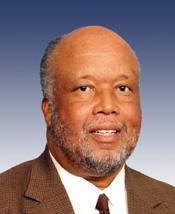
Representative Scorecard
Bennie G. Thompson
Bennie G. Thompson (D-MS), U.S. Representative, scores 59 (Ally) on the Build the Promise Project 2029 scorecard. Voted with Project 2029 values on 45 of 50 tracked votes. Flagged campaign money from FEC filings: Defense contractors $55,000, Fossil fuel $9,500, Wall Street $6,000, Pharma $5,500, Private prisons $5,000.
Project 2029 Alignment Score
Voted with Project 2029 values on 45 of 50 tracked votes - score reduced by 5 donor flags
Voting Record
Vote History
| Vote | Date | Cast | Aligned | Importance |
|---|---|---|---|---|
|
Undoing clean engine rules for tugs and ferries
Voted no: kept the rule that cuts diesel smoke from tugs and ferries.
environment
What this vote meansCalifornia makes tugboats and ferries switch to cleaner engines. Backers say the change would save up to $5 billion in health costs. This vote threw out that rule, 214 to 208. Nearly all Democrats voted no. A yes vote threw out the clean engine rule for boats in California waters. A no vote kept the rule that cuts diesel smoke from tugs and ferries. Full details: California Harbor Craft Emissions - CRA Revoking the Tugboat and Ferry Waiver (H.J.Res. 213)Congressional Review Act resolution nullifying the EPA decision at 90 Fed. Reg. 1998 that partially authorized California to enforce amendments to the Air Resources Board's Commercial Harbor Craft regulation. The amendments require tugboats, ferries, excursion vessels, workboats, and commercial fishing boats operating in California waters to move to cleaner diesel engines or to zero-emission power, with standards and compliance dates varying by vessel class and engine model year. Introduced by Rep. James Gallagher (R-CA-1) and managed on the floor by Rep. Gary Palmer (R-AL), who argued the standards would impose billions in costs on boat operators, that diesel particulate filters have not been certified as safe for maritime use, and that the Coast Guard and several maritime labor unions had raised fire risk objections with California. Energy and Commerce Ranking Member Frank Pallone (D-NJ) said the harbor craft standards would avoid up to $5 billion in health care costs, and that both the Government Accountability Office and the Senate Parliamentarian have ruled California Clean Air Act waivers are orders rather than rules and so cannot be repealed under the CRA at all. Rep. Zoe Lofgren (D-CA) said every California House Democrat opposed the resolution and repeated that a federal court had ruled days earlier that EPA broke the law by relabeling these waivers as rules. Passed 214-208 on the last day of session before a seven-week pre-election recess: Republicans 210-1 with Fitzpatrick (PA) the lone nay, Democrats 3-207 with Cuellar (TX), Davis (NC), and Gonzalez (TX) voting yea, and Kiley (I-CA) yea. Project 2029 position is nay: this is the second of two back-to-back repeals of California port and harbor air rules, taken under a closed rule in the final hours of the Congress, against a standing court ruling that the waivers were never eligible for this process, and it shifts the cost of diesel exhaust from the operators who generate it onto the people who live and work at the waterfront. |
Sep 16, 2026 | Nay |
|
|
|
Letting the feds pull your benefit records
Voted no: kept limits on who can see your benefit records.
civil_liberties
What this vote meansStates would have to hand the Justice Department records on people who get Medicaid, food aid, or jobless pay. No proof of a crime is needed first. It passed 217 to 207. Almost all Democrats voted no. A yes vote let the feds demand records on people who get aid. A no vote kept limits on who can see your benefit records. Full details: PROOF Act - Open-Ended DOJ Access to State Benefit Program Records (H.R. 10326)House passage of a bill by Rep. Jeff Van Drew (R-NJ) requiring the head of any state agency administering a listed federally funded program to provide the Attorney General, on written request, 'such information as the Attorney General may require' for investigating or prosecuting alleged fraud in that program. The bill sets no probable cause standard, no reasonable suspicion standard, and no requirement that any named person be under suspicion. The listed programs are Medicaid, SNAP, TANF, state unemployment compensation, the Coronavirus Relief Fund, State and Local Fiscal Recovery Funds, Emergency Rental Assistance, school emergency relief grants, the BEAD broadband program, Community Development Block Grants, FEMA public assistance and hazard mitigation, and the State Small Business Credit Initiative, followed by a catch-all covering any other state program the Attorney General identifies as vulnerable to fraud. The records covered are identity verification records, benefit disbursement logs, provider billing statements, demographic information tied to an active investigation, and 'any other information, as determined appropriate by the Attorney General.' Section 3 requires handling under the Privacy Act and HIPAA, encryption, use limited to fraud law enforcement, and destruction of records when the investigation or proceeding ends. Introduced September 10 and passed September 16 under a closed rule, with no hearing, no subcommittee hearing, and no markup. Judiciary Ranking Member Jamie Raskin (D-MD) argued the bill legislates what DOGE was blocked from doing in court, that states already share program data with federal fraud investigators under program-specific statutes that carry privacy standards, that 21 state attorneys general are currently fighting a DOJ demand for blanket access to the records of everyone ever enrolled in SNAP, and that the two open-ended clauses let Attorney General Todd Blanche define both which programs and which records are covered. Van Drew cited Minnesota SNAP and child care billing fraud rings and state agencies that refused federal data requests. Rep. Kiley (I-CA) voted yea while agreeing that Raskin's process objections were legitimate. Passed 217-207: Republicans 210-1 with Massie (KY) the lone nay, Democrats 6-206, Kiley (I-CA) yea. The Democratic yeas were Cuellar (TX), Davis (NC), Golden (ME), Gonzalez (TX), Gray (CA), and Perez (WA). Project 2029 position is nay: fraud in benefit programs is real and is already prosecuted with grand jury subpoenas and existing data-sharing mandates. Writing a statute that lets a politically directed Attorney General demand any record about any beneficiary of any program he names, with no suspicion standard and no judge in the loop, builds the master database the courts have repeatedly blocked, and it puts the private records of tens of millions of people who are suspected of nothing inside the Department that has been prosecuting the President's critics. |
Sep 16, 2026 | Nay |
|
|
|
Ships at port can keep burning diesel
Voted no: kept the rule that cuts diesel smoke at California ports.
environment
What this vote meansBig ships at California ports must plug in and shut off their diesel engines. That rule can cut cancer risk near ports by more than half. This vote threw the rule out, 216 to 211. Most Democrats voted no. A yes vote threw out the rule that makes docked ships plug in. A no vote kept the rule that cuts diesel smoke at California ports. Full details: California Port Pollution - CRA Revoking the At-Berth Shore Power Waiver (H.J.Res. 210)Congressional Review Act resolution nullifying the EPA decision at 88 Fed. Reg. 72461 that authorized California to enforce amendments to the Air Resources Board's Ocean-Going Vessels At-Berth Regulation. The regulation requires large ships docked at California ports to shut down their auxiliary diesel engines and either plug into shore power or run an approved emission capture and control system. The amendments at issue extended that requirement to additional categories of ocean-going vessels, including tankers and vehicle carriers. Introduced by Rep. Vince Fong (R-CA-20) and managed on the floor by Energy and Commerce Chairman Brett Guthrie (R-KY), who said the compliance technology does not exist at scale and that the costs would be passed to consumers on every good moving through California. Rep. Doris Matsui (D-CA) led the opposition and said the rule is expected to cut cancer risk in communities near major ports by as much as 55 percent and deliver roughly $2.3 billion in public health benefits, that compliance reached 95 percent in 2025 with more than 3,400 vessel visits using shore power, and that the pass-through cost works out to about $3 a year for the average California driver. Rep. Zoe Lofgren (D-CA), chair of the California Democratic delegation, told the House that a federal court had ordered EPA on September 12, three days before the vote, to withdraw or correct its reclassification of these Clean Air Act Section 209 waiver decisions as rules, the maneuver that made them eligible for CRA repeal in the first place. Passed 216-211: Republicans 212-1 with Fitzpatrick (PA) the lone nay, Democrats 3-210 with Cuellar (TX), Davis (NC), and Gonzalez (TX) voting yea, and Kiley (I-CA) yea. Kiley said he supports the two-decade-old shore power program for container, passenger, and refrigerated ships and objected only to extending it to tanker boilers. Project 2029 position is nay: this strips a rule that is already working, at 95 percent compliance, from the port communities that breathe the exhaust, in exchange for a fuel price benefit its own supporters measure in fractions of a cent per gallon, and it does so through a Congressional Review Act maneuver a federal court had ruled unlawful days earlier. |
Sep 15, 2026 | Nay |
|
|
|
Ending the Iran war: the biggest vote yet
Voted yes: told Trump to pull U.S. troops out of the Iran war.
security
What this vote meansThis tells Trump to pull U.S. troops out of the Iran war. The House passed it 220 to 204. Seven Republicans voted yes, the most so far. The war has gone on 200 days. So far 19 troops have died. A yes vote told Trump to pull U.S. troops out of the Iran war. A no vote let Trump keep the Iran war going without a vote from Congress. Full details: Iran War Powers Resolution - Third House Passage on the Widest Margin Yet (H.Con.Res. 93)Concurrent resolution directing the President, pursuant to Sec. 5(c) of the War Powers Resolution, to remove U.S. Armed Forces from hostilities against Iran absent a declaration of war or a specific congressional authorization, exempting only those elements needed to defend the United States, an ally, or a partner from imminent attack. Introduced by Rep. Seth Moulton (D-MA), a Marine veteran of the Iraq war. Passed 220-204, the widest margin of the six Iran war powers votes the House has taken this Congress: Democrats 213-0, Republicans 7-203, Rep. Kiley (I-CA) nay, Rep. Garamendi (D-CA) not voting. The seven Republican yeas were Barrett (MI), Davidson (OH), Fitzpatrick (PA), Massie (KY), Mace (SC), Miller-Meeks (IA), and Nunn (IA). Mace, Miller-Meeks, and Nunn had not voted for any of the five earlier resolutions, and their defections seven weeks before the midterms took the Republican crossover from four to seven. Foreign Affairs Chairman Brian Mast (R-FL) controlled the opposition and used most of his time demanding that Moulton name the specific aircraft, ships, and personnel he wanted withdrawn, calling the resolution political theater. Ranking Member Gregory Meeks (D-NY) told the House the war was in its seventh month after the President said it would take four to six weeks, that 19 service members had been killed and more than 750 wounded, that Americans had paid over $100 billion more for gasoline and diesel since it began, and that the Foreign Affairs Committee has still not held a single public hearing with an administration official on the war. Rep. Brad Schneider (D-IL) counted 200 days of fighting with none of the four original war aims achieved. Moulton said the Strait of Hormuz remains closed, Iran's nuclear program is intact, and the administration lifted sanctions on Iran in the middle of the war. The resolution was received in the Senate on September 16 and referred to the Foreign Relations Committee. Project 2029 position is yea: Congress issued this same directive in June, the President ignored it, and the constitutional answer to a defied directive is to issue it again on the record rather than to stop voting. |
Sep 15, 2026 | Yea |
|
|
|
Delaying rules to save right whales until 2035
Voted no: let new rules to protect the whales start in 2028 as planned.
environment
What this vote meansOnly about 380 North Atlantic right whales are left. Fishing gear is a top cause of their deaths. This bill blocks new rules to keep them safe from lobster gear until 2035, seven more years. It passed 219-196, with most Democrats voting no. A yes vote put off new rules to protect right whales from fishing gear until 2035. A no vote let new rules to protect the whales start in 2028 as planned. Full details: Right Whale Protections Delayed to 2035 - Northeast Lobsterman Protection Act (H.R. 9436)House passage of a bill by Rep. Mike Lawler (R-NY), co-led by Rep. Jared Golden (D-ME), amending the December 2022 omnibus (Section 101 of Division JJ of the Consolidated Appropriations Act, 2023) by striking '2028' and inserting '2035.' The 2022 rider had deemed the American lobster and Jonah crab fisheries in compliance with the Endangered Species Act and Marine Mammal Protection Act and frozen any new federal rules to reduce rope entanglements through December 31, 2028, after a federal judge found NOAA's 2021 Atlantic Large Whale Take Reduction Plan inadequate to protect the North Atlantic right whale. Roughly 380 right whales remain, with about 70 breeding females; entanglement in fishing gear and vessel strikes have been the leading causes of death since 2011, and NOAA's best science says the species can absorb fewer than one human-caused death per year and still recover. Committee Democrats' dissenting views called the bill a 13-year waiver from the two bedrock wildlife laws, enacted two years before the existing pause even expires. The White House strongly supported it. Passed 219-196: Republicans 209-2 (Bean and Fitzpatrick nay), Democrats 10-193, Kiley (I) nay. The Democratic yeas were the New England delegation members with lobster constituencies (Golden, Pingree, Pappas, Goodlander) plus Costa, Cuellar, Davis (NC), Gonzalez (TX), Gray, and Gluesenkamp Perez. Project 2029 position is nay: suspending the Endangered Species Act for a single industry until 2035 is a death sentence by legislation for a species with fewer than 400 animals left, and it removes every incentive to deploy the ropeless gear that would let lobstermen and whales coexist. |
Sep 1, 2026 | Nay |
|
|
|
A stand against socialism, tied to voter ID
Voted no: said no to a voter ID rule tied to a stand against socialism.
democracy
What this vote meansThis statement says the House is against socialism. It also calls for a law that makes voters prove citizenship and show photo ID. It passed 220-192, with just 8 Democrats voting yes. Most Democrats said the ID rule would keep people from voting. A yes vote said no to socialism and yes to a photo ID rule for voting. A no vote said no to a voter ID rule tied to a stand against socialism. Full details: Condemning Socialism Resolution with SAVE Act Rider - Pre-Midterm Messaging Vote (H.Res. 1490)House vote on a resolution by Rep. Jeff Crank (R-CO), introduced August 27 and rushed to the floor on the first day back from recess, declaring that the House 'condemns and denounces socialism in all its forms.' The text recycles the Cold War framing of the 2023 and 2025 anti-socialism resolutions - socialism 'necessitates a concentration of power' and has caused 'the killing of over 100,000,000 people' - but bolts on something new: it names the Democratic Socialists of America, cites the November 2025 election of a democratic socialist as mayor of New York, and resolves that 'American elections are for American citizens only' and that Congress should enact the SAVE America Act, the documentary-proof-of-citizenship and photo ID bill Democrats have blocked all year. That rider collapsed Democratic support. The February 2023 version (H.Con.Res. 9) passed 328-86 with 109 Democratic yeas; the November 2025 version (H.Con.Res. 58) passed 285-98 with 86; this one passed 220-192 with 8: Castor, Cuellar, Davis (NC), Golden, Gonzalez (TX), Gluesenkamp Perez, Soto, and Vasquez, with Houlahan and Goodlander voting present and Kiley (I) yea. Every Republican voted yea. Minority Leader Jeffries said Democrats opposed it because it endorsed 'toxic voter suppression legislation.' The rule bringing it to the floor survived 210-208 only because Golden and Gluesenkamp Perez voted with Republicans to offset five GOP defections, which Democratic leadership called 'a significant breach of trust.' Project 2029 position is nay: this is a red-baiting exercise designed to be unvotable, fusing a loyalty oath against 'socialism' with an endorsement of the SAVE Act's citizenship-papers regime so that any nay can be cut into an attack ad. The swing from 109 to 86 to 8 Democratic yeas tracks the poison pill, not any shift on socialism. |
Sep 1, 2026 | Nay |
|
|
|
Letting Trump's team change who gets disability checks
Voted no: said Trump's team should not get this power without more rules to protect people.
workers
What this vote meansThis lets Trump's team run tests that change the rules for Social Security disability checks through 2031. They could change who qualifies and how much they get. Trump once proposed using this power to cut these checks by $50 billion. It passed 232-188. A yes vote gave Trump's team broad power to test new rules for disability checks. A no vote said Trump's team should not get this power without more rules to protect people. Full details: SSDI Demonstration Authority - Open-Ended Waiver Power for Trump's SSA (H.R. 8884)Rep. Austin Scott's (R-GA) bill revives the Social Security Administration's lapsed Section 234 authority, expired since 2022, to run Social Security Disability Insurance demonstration projects through 2031 that can waive program rules, including eligibility criteria and benefit formulas, for voluntary participants. It requires 120 days' notice to Congress and promises that a participant's 'total income' will not fall. Passed 232-188: Republicans 212-0, Democrats 19-188. Ways and Means Democrats opposed it because SSA has disclosed no plan for the authority, the income guarantee still allows benefits below current law once earnings are counted, applicants get no protection against tougher eligibility tests, there is no public comment or congressional disapproval, and administrative costs shift from the trust fund onto SSA's already-strained customer-service budget. Rep. Larson's amendment adding exactly those guardrails was rejected 23-18 in committee. Trump's first-term budgets proposed using this same demonstration power to cut SSDI by roughly $50 billion over ten years. Project 2029 position is nay: return-to-work pilots have real bipartisan history, but handing an administration with a record of proposed disability cuts a blank check to rewrite SSDI rules, with none of the protections Democrats asked for, is not a work incentive. |
Jul 23, 2026 | Nay |
|
|
|
Telling Trump again to end the Iran war
Voted yes: told Trump again to end the war with Iran unless Congress approves it.
security
What this vote meansThis tells Trump to pull U.S. forces out of the Iran war unless Congress approves it. Congress passed this once in June, and Trump ignored it. The ceasefire then ended and fighting resumed. It passed 214-208, a day after three U.S. troops were killed. A yes vote told Trump again to end the war with Iran unless Congress approves it. A no vote let Trump keep the Iran war going without a vote from Congress. Full details: Iran War Powers Resolution - Second House Passage After Ceasefire Collapse (H.Con.Res. 89)Concurrent resolution directing the President, pursuant to Sec. 5(c) of the War Powers Resolution, to remove U.S. Armed Forces from hostilities against Iran, including any ground forces in a combat or occupation role, absent a declaration of war or authorization from Congress. Introduced by Rep. Pramila Jayapal (D-WA). Passed 214-208: Democrats 210-0, joined by Republicans Fitzpatrick, Massie, Davidson, and Barrett; Rep. Kiley (I-CA) voted nay. This was the House's fifth Iran war powers vote and its second passage. H.Con.Res. 86 cleared both chambers on June 23 and the administration ignored it; on July 10 Trump notified Congress that military action had resumed after he declared the month-long ceasefire over, and the two sides have traded strikes since. The vote came a day after three U.S. service members were killed in an Iranian attack on a base in Jordan. Hours later the Senate fell short 47-49 on a binding companion, S.J.Res. 180 from Sen. Van Hollen. Project 2029 position is yea: a directive Congress has already issued once and the President has openly defied must be issued again, on the record, until the war is authorized or ended. |
Jul 23, 2026 | Yea |
|
|
|
Budget plan for Iran war and voter ID
Voted no: refused to add $95 billion to the debt for the Iran war and voter ID.
security
What this vote meansThis plan lets Congress add $95 billion to the debt. Most of it pays for the Iran war, which Congress has twice voted to end. Another $10 billion pushes states to adopt voter ID rules. It passed 216-214, with every Democrat voting no. A yes vote opened a fast track to spend $95 billion on the Iran war and voter ID. A no vote refused to add $95 billion to the debt for the Iran war and voter ID. Full details: FY2027 Budget Resolution - Reconciliation Blueprint for the Iran War and SAVE Act (H.Con.Res. 113)A budget resolution whose operative content is its reconciliation instructions: four House committees are directed to report legislation adding up to $95 billion to the deficit by September 11, 2026. Armed Services gets $60 billion and Intelligence $13 billion to fund the unauthorized Iran war, Agriculture gets $12 billion in farm aid tied to war-driven cost increases, and House Administration gets $10 billion for grants pushing states to adopt SAVE America Act voter ID and citizenship rules. Nothing is offset; the blueprint projects a $1.6 trillion FY2027 deficit. OMB Director Vought whipped the vote in person. Passed 216-214: Republicans 216-2 (Davidson and Massie nay, Davidson calling a package with no pay-fors dead on arrival), Democrats 0-211, Kiley (I) nay. The Senate parliamentarian has already ruled SAVE Act provisions non-budgetary, and the Senate could not pass the SAVE Act on its own. Project 2029 position is nay: Congress's answer to a war it has twice voted to end should not be a filibuster-proof path to fund it, and the power of the purse cannot be used to launder a voter ID mandate that failed on its merits. |
Jul 22, 2026 | Nay |
|
|
|
A record defense bill that adds voter ID
Voted no: said no to a defense bill that funds the Iran war and adds voter ID.
security
What this vote meansThis defense bill spends $1.15 trillion, about $250 billion more than last year. It funds the Iran war, which Congress never approved. It also bars military health plans from covering trans care and adds voter ID. It passed 216-212, mostly on party lines. A yes vote passed a record defense bill that funds the Iran war and adds voter ID. A no vote said no to a defense bill that funds the Iran war and adds voter ID. Full details: FY2027 NDAA - House Passage Over Iran War and Poison-Pill Objections (H.R. 8800)House passage of the roughly $1.15 trillion FY2027 National Defense Authorization Act, about $250 billion above last year, on a 216-212 vote that broke the bill's decades-long bipartisan pattern: Republicans 209-7, Democrats 6-205 (Cuellar, Davis, Golden, Gonzalez, Gray, and Gluesenkamp Perez yea). Ranking Member Adam Smith led the opposition, arguing that with the administration refusing to seek authorization for the Iran war, 'as we support anything in the defense area, we are de facto supporting this war with no end in sight.' Democrats also objected to Section 219, which locks U.S. and Israeli defense technology and supply chains together (a Massie-Khanna amendment to strike it was denied a floor vote), to July 21 amendments barring TRICARE coverage of gender-transition care (219-208), banning transgender girls from Defense Department school sports (221-203), and loosening personal firearms rules on bases (215-214), and to the rule directing that the SAVE America Act be appended to the bill before it goes to the Senate. The bill also renames the Pentagon the Department of War. Republican nays included Massie, Roy, Luna, and Crane. Project 2029 position is nay: a record defense authorization that funds an unauthorized war, hard-codes a foreign supply-chain entanglement, carries anti-trans riders, and doubles as the delivery vehicle for a federal voter ID mandate is not a bill about the troops. |
Jul 22, 2026 | Nay |
|
|
|
A weak stock ban tied to voter ID
Voted no: turned down a weak stock ban that came with a photo ID rule for voting.
democracy
What this vote meansThis bill says members of Congress cannot buy stocks. But they can keep all the stock they own now, and it does not cover the President. Republicans also added a rule that voters must show photo ID. It passed 232-198, with most Democrats voting no. A yes vote backed a stock ban with big loopholes and a photo ID rule for voting. A no vote turned down a weak stock ban that came with a photo ID rule for voting. Full details: Stop Insider Trading Act - Fig-Leaf Stock Ban Carrying a Voter ID Mandate (H.R. 7008)Rep. Bryan Steil's (R-WI) bill bars members of Congress, spouses, and dependent children from buying individual stocks and requires seven days' public notice before a sale, with penalties of $2,000 or 10 percent of the trade. It does not require anyone to divest: members keep every share they hold, may sell at any time after notice, may reinvest dividends in the same companies, and the bill leaves the President, Vice President, and executive branch untouched. The Campaign Legal Center said its exceptions 'swallow the few new rules it does try to enact,' and Rep. Jayapal called it 'a fake stock trading ban.' Republicans then folded in H.R. 9368, the Voter ID Act, a national photo ID requirement for federal ballots lifted from the SAVE America Act, under which a voter without ID must cure a provisional ballot within three days. Rules Committee Republicans twice rejected Democratic substitutes requiring full divestment and covering the White House; Rep. Magaziner's motion to recommit failed 211-218 on party lines. Passed 232-198: Republicans 218-0, Democrats 13-198 (Castor, Cuellar, Davis, Golden, Gonzalez, Gottheimer, Kaptur, Lee, Moskowitz, Pappas, Perez, Soto, Tran yea). Golden called the voter ID rider 'cynical' but voted yes anyway; Rep. Yvette Clarke called the package a 'Trojan horse.' Project 2029 position is nay: a stock ban that bans no one from owning stock, welded to a photo ID mandate the Senate has already rejected, is voter suppression wearing an ethics costume. |
Jul 22, 2026 | Nay |
|
|
|
A spending freeze that skips past the election
Voted no: said no to a spending freeze that Democrats had no part in setting.
economy
What this vote meansThis keeps spending the same from October 1 to December 4. That pushes any shutdown fight past the fall election. It passed 220-205, but most Democrats voted no. They had no say in setting those spending levels. A yes vote kept spending the same and pushed any shutdown fight past the election. A no vote said no to a spending freeze that Democrats had no part in setting. Full details: FY2027 Continuing Resolution - Pre-Election Stopgap (H.R. 9770)A 'clean' continuing resolution funding the government from October 1 through December 4, 2026 at current levels - passed in July, before the August recess, to push any shutdown fight safely past the November midterms. Passed 220-205: Republicans 213-1 (Massie the lone nay), Democrats 6-204 against (Castor, Cuellar, Davis, Golden, Gonzalez, Vasquez voting yea). Most House Democrats opposed locking in current spending levels with no negotiation while awaiting an uncertain 60-vote Senate. Project 2029 position is nay: a CR timed to shield the majority from accountability before an election, extending funding levels Democrats had no hand in setting, is a political instrument - not a budget. |
Jul 21, 2026 | Nay |
|
|
|
Pulling U.S. forces out of the Lebanon war
Voted yes: told U.S. forces to stop taking part in the fighting in Lebanon.
security
What this vote meansThis would order U.S. forces to stop taking part in the war in Lebanon. It failed 189-235. Most Democrats voted yes, and almost all Republicans voted no. The U.S. helps a partner's air force plan strikes there, and Congress never said yes to that. A yes vote told U.S. forces to stop taking part in the fighting in Lebanon. A no vote let U.S. forces keep helping with the fighting in Lebanon. Full details: Lebanon War Powers Resolution (H.Con.Res. 108)Concurrent resolution directing the removal of U.S. Armed Forces from unauthorized involvement in hostilities in Lebanon, with explicit carve-outs for security cooperation with the Lebanese Armed Forces and protection of diplomatic facilities. Introduced by Rep. Rashida Tlaib (D-MI); unlike her broader April version (which failed 92-324), this narrowed resolution won the backing of Leader Jeffries and Democratic leadership. Failed 189-235: Democrats voted 187-22 for it, Republicans 2-212 against (Massie yea; Boebert voted yea, then said it was a mistake). Democratic nays included Cuellar, Suozzi, Gottheimer, and Sherman. Project 2029 position is yea: U.S. intelligence and strike-coordination support for a foreign occupation is involvement in hostilities, and the War Powers Resolution does not have a carve-out for wars conducted through a partner's air force. |
Jun 30, 2026 | Yea |
|
|
|
Building more homes: the House votes yes
Voted yes: gave final approval to build more homes and curb Wall Street buyers.
housing
What this vote meansThis law helps build more homes. It adds money for affordable housing and speeds up reviews. It also bars big investors that own 350 or more houses from buying more. The House passed it 358 to 32, sending it on to become law in July. A yes vote gave final approval to build more homes and curb Wall Street buyers. A no vote tried to stop the housing law from taking effect. Full details: Housing Supply - 21st Century ROAD to Housing Act - House Final Passage (H.R. 6644)Final House passage (358-32) of the landmark bipartisan housing supply law, clearing it for enactment. All 32 nays were Republicans; every voting Democrat supported it. The law expands affordable-housing financing and planning grants, streamlines environmental review for housing, reforms manufactured-housing rules, strengthens community banks' role in housing lending, and bars large institutional investors (350+ single-family homes) from buying additional single-family homes. Became law July 11, 2026. Project 2029 position is yea: this is what governing on the housing crisis looks like - more supply, more financing, and Wall Street pushed out of the starter-home market. |
Jun 23, 2026 | Yea |
|
|
|
Keeping a spy program that skips warrants
Voted no: let the government's power to spy without a warrant run out.
civil_liberties
What this vote meansThis bill would have let the government keep spying without a warrant. It failed 198 to 218, and the program ended for the first time since 2008. Most Democrats wanted a warrant rule first. They also protested Trump's new acting spy chief, Bill Pulte. A yes vote kept the government spying without warrants for a few more weeks. A no vote let the government's power to spy without a warrant run out. Full details: FISA Section 702 Extension Fails - Surveillance Authority Lapses (H.R. 9238)A short-term extension of FISA Section 702 warrantless surveillance authority to July 2, 2026. Failed under suspension 198-218, and Section 702 lapsed on June 12, 2026 - the first lapse since the program's creation in 2008. Democrats voted 7-199 against, refusing to extend the authority without warrant-requirement reforms and in protest of Trump's installation of Bill Pulte as acting Director of National Intelligence; 19 civil-liberties Republicans (Massie, Davidson, Roy, and others) also voted nay. Project 2029 position is nay: Congress has spent a decade extending warrantless surveillance with reform promises that never materialize. Refusing to rubber-stamp another extension - especially with an unconfirmed loyalist atop the intelligence community - is the constitutional position. |
Jun 11, 2026 | Nay |
|
|
|
Making bosses bargain with new unions
Voted yes: forced bosses to bargain with new unions and reach a first contract.
workers
What this vote meansWhen workers form a union, some bosses stall and never sign a first contract. This bill makes them start talks within 10 days. After 120 days with no deal, a neutral panel decides. It passed 230 to 193 with all Democrats and 20 Republicans. A yes vote forced bosses to bargain with new unions and reach a first contract. A no vote let bosses keep stalling and never sign a first union contract. Full details: Faster Labor Contracts Act - House Passage via Discharge Petition (H.R. 5408)Amends the National Labor Relations Act to end the first-contract stall tactic: employers must begin bargaining within 10 days of a newly certified union's request; after 90 days without a deal either party may invoke FMCS mediation, and after 30 more days a binding arbitration panel settles the first contract. Led by Rep. Donald Norcross (D-NJ) with Rep. Pete Stauber (R-MN); GOP leadership buried it until a discharge petition hit 218 signatures. Passed 230-193 with every voting Democrat and 20 Republicans. Backed by the Teamsters and AFL-CIO. Project 2029 position is yea: winning a union election means nothing if the employer can simply refuse to ever sign a first contract - this is the single highest-impact labor law fix available. |
Jun 9, 2026 | Yea |
|
|
|
Sending $70 billion for ICE to Trump's desk
Voted no: tried to stop the $70 billion ICE bill, which passed by just two votes.
immigration
What this vote meansThis was the final vote on $70 billion for ICE. It passed by just two votes, 214-212, and Trump signed it. It funds 100,000 beds to lock people up and more local police deals with ICE. It has no body camera or fair hearing rules. A yes vote sent $70 billion for ICE to Trump to sign, with no new rules for officers. A no vote tried to stop the $70 billion ICE bill, which passed by just two votes. Full details: Secure America Act - $70 Billion ICE Expansion - House Passage (S. 2)House passage of the $70 billion immigration enforcement reconciliation bill, 214-212 - the narrowest possible margin. Every yea was a Republican; every Democrat voted nay, joined by Rep. Kevin Kiley (I-CA), who had left the Republican Party in March 2026 and cast the lone non-Democratic no. One more defection would have produced a tie and killed the bill. Signed into law June 10, 2026 as Public Law 119-98. The law funds ICE's expansion to 100,000 detention beds and a goal of 1 million removals annually, a 1,075% increase in 287(g) local police agreements, and Border Patrol hiring - while omitting the body camera, use-of-force, and due process reforms Democrats had demanded through a 76-day DHS shutdown. Project 2029 position is nay: Congress voted by two votes to build the largest detention and deportation machine in American history with no accountability attached. |
Jun 9, 2026 | Nay |
|
|
|
Aid for Ukraine and new sanctions on Russia
security
What this vote meansThis bill gives Ukraine $8 billion in loans for weapons and a fund to rebuild. It also puts new sanctions on Russian banks, oil firms, and officials. House leaders blocked a vote, so members forced one. It passed 226 to 195 over White House objections. A yes vote gave Ukraine loans for weapons and hit Russia with new sanctions. A no vote sided with the White House against more help for Ukraine. Full details: Ukraine Support Act - Passed Over Leadership by Discharge Petition (H.R. 2913)Comprehensive Ukraine package: a reconstruction trust fund, $8 billion in military financing loans, extension of the Ukraine Security Assistance Initiative through 2027, and new sanctions on Russian officials, banks, oil and mining companies, and Rosatom. Introduced by Rep. Gregory Meeks (D-NY). GOP leadership refused to bring it up, so a bipartisan discharge petition (Meeks, Hoyer, Fitzpatrick, Kaptur, Bacon, Keating, Kiley) reached 218 signatures and forced the vote. Passed 226-195 with 18 Republicans and 1 independent joining every voting Democrat - over White House objections. Project 2029 position is yea: standing with a democracy resisting invasion is both a strategic and moral imperative, and the discharge petition itself was a rare reassertion of the House majority's will over leadership obstruction. |
Jun 4, 2026 | Not_voting |
|
|
|
Ending the Iran war: House passes it
Voted yes: told Trump to pull the troops out of the Iran war.
security
What this vote meansThis measure told Trump to pull the troops out of the Iran war. After four months of war, the House passed it, 215 to 208. Four Republicans voted yes. Jared Golden, whose vote had killed it twice, finally voted yes too. A yes vote told Trump to pull the troops out of the Iran war. A no vote let Trump keep the war going without a yes from Congress. Full details: Iran War Powers Resolution - House Passage (H.Con.Res. 86)Concurrent resolution directing the President, pursuant to Sec. 5(c) of the War Powers Resolution, to remove U.S. Armed Forces from hostilities with Iran. Introduced by Rep. Gregory Meeks (D-NY). Passed 215-208 after GOP leadership had pulled an earlier vote via a procedural loophole. Four Republicans voted yea: Massie, Barrett, Davidson, and Fitzpatrick. Rep. Jared Golden (D-ME) - whose single vote killed the two previous attempts - finally flipped to yea after securing a 'clean' resolution. Project 2029 position is yea: after four months of undeclared war, a bipartisan House majority voted to reassert Congress's Article I war powers. |
Jun 3, 2026 | Yea |
|
|
|
Women's museum bill that shuts out trans women
Voted no: blocked the changed bill and its anti-trans rule.
civil_rights
What this vote meansCongress agreed to build a women's history museum in 2020. This bill would have picked its spot on the National Mall. Republicans changed it to keep out trans women and give Trump control. Democrats then voted no, and it failed 204 to 216. A yes vote backed a women's museum that bars trans women and that Trump would control. A no vote blocked the changed bill and its anti-trans rule. Full details: Smithsonian Women's History Museum - Poison-Pill Amendments Kill the Bill (H.R. 1329)The Smithsonian American Women's History Museum Act would have designated a National Mall site for the museum Congress authorized with broad bipartisan support in 2020. House Republicans amended it to require the museum be dedicated only to 'biological women' - explicitly excluding transgender women - and to hand Trump authority over the site and content. The Democratic Women's Caucus pulled support en masse and the bill failed 204-216: every voting Democrat opposed it, joined by 6 hardline Republicans opposed for their own reasons. Project 2029 position is nay: Democrats voted against a museum they champion because the amended bill weaponized it - both as an anti-trans statement and as a precedent for presidential control over Smithsonian content. Killing the poisoned version was the pro-museum vote. |
May 21, 2026 | Nay |
|
|
|
Making schools tell parents about trans students
civil_rights
What this vote meansSchools would need a parent's permission to use a student's new name or pronouns. Schools that refuse lose federal money. It passed 217 to 198. Critics say it forces schools to tell parents a child is trans, even when home is not safe. A yes vote required schools to tell parents before using a trans student's new name. A no vote let schools use a student's new name without telling parents first. Full details: PROTECT Kids Act - Forced Outing of Trans Students (H.R. 2616)Conditions federal K-12 education funds on schools obtaining parental consent before honoring a student's change of name, pronouns, or gender marker on school forms, or changing sex-based accommodations. Passed 217-198. Every voting Republican voted yea, joined by 8 Democrats: Cuellar (TX), Davis (NC), Fields (LA), Gillen (NY), Gonzalez (TX), Kaptur (OH), Gluesenkamp Perez (WA), and Vindman (VA). LGBTQ+ advocates warn the bill forcibly outs transgender students to their families regardless of their safety at home. Project 2029 position is nay: using federal education funding as leverage to compel schools to out vulnerable children is not parental rights - it is the federal government mandating a policy that every major medical and child-welfare association warns puts kids at risk. |
May 20, 2026 | Not_voting |
|
|
|
Ending the Iran war: tied in the House
Voted yes: told Trump to pull the troops out of the Iran war.
security
What this vote meansThis measure told Trump to pull the troops out of the Iran war. The House tied, 212 to 212, and under House rules a tie fails. Jared Golden was again the only Democrat to vote no. For the second time, his one vote killed it. A yes vote told Trump to pull the troops out of the Iran war. A no vote let Trump keep the war going without a yes from Congress. Full details: Iran War Powers Resolution - House Fails on a 212-212 Tie (H.Con.Res. 75)Concurrent resolution directing the President to remove U.S. Armed Forces from hostilities with Iran under Sec. 5(c) of the War Powers Resolution. Introduced by Rep. Josh Gottheimer (D-NJ). Failed on a 212-212 tie - under House rules, a tie fails. Three Republicans voted yea: Fitzpatrick (PA), Barrett (MI), and Massie (KY). Rep. Jared Golden (D-ME) was the only Democrat to vote nay - for the second time, his single defection killed a war powers resolution that would otherwise have passed. Project 2029 position is yea: Article I vests the war powers in Congress. A war the administration will not even submit to Congress for authorization is a war Congress has the duty to vote on. |
May 14, 2026 | Yea |
|
|
|
Ending the Iran war: House loses by one
Voted yes: told Trump to pull the troops out of the Iran war.
security
What this vote meansThis measure told Trump to pull the troops out of the Iran war. Only Congress has the power to start a war. The measure failed by one vote, 213 to 214. Jared Golden was the only Democrat to vote no, and that sank it. A yes vote told Trump to pull the troops out of the Iran war. A no vote let Trump keep the war going without a yes from Congress. Full details: Iran War Powers Resolution - House (H.Con.Res. 40)Concurrent resolution directing the President to remove U.S. Armed Forces from hostilities against Iran under the War Powers Resolution (Sec. 5(c)). Introduced by Rep. Gregory Meeks (D-NY). Failed 213-214 - by a single vote. Rep. Jared Golden (D-ME) was the only Democrat to vote NAY, and his defection was the decisive vote that killed the resolution. Rep. Thomas Massie (R-KY) was the only Republican to cross over and vote YEA. On the prior House war powers vote (H.Con.Res. 38, March 5), four Democrats had voted against - Cuellar, Golden, Landsman, and Vargas. By April 16, Cuellar, Landsman, and Vargas had all switched to YEA. Golden alone held out, casting the single vote that prevented Congress from reasserting its constitutional war powers authority. Project 2029 position is yea: the President cannot unilaterally wage war on a foreign nation without congressional authorization. Article I of the Constitution vests the war powers in Congress, not the executive. |
Apr 16, 2026 | Yea |
|
|
|
Full funding for ICE with no new rules
Voted no: said ICE should not get the money without new rules.
immigration
What this vote meansThis bill gives ICE and border agents full funding. It adds no new rules. It came during a 60-day shutdown of Homeland Security. Republicans forced that shutdown to get this money. It passed 221-209. It pays for mass deportations with few checks on ICE. A yes vote gave ICE full funding with no new rules on how it treats people. A no vote said ICE should not get the money without new rules. Full details: DHS Appropriations - ICE and CBP Funding (H.R. 7744)House passage of H.R. 7744, a standalone DHS Appropriations bill providing full unrestricted funding for ICE and CBP operations during an ongoing 60-day partial DHS shutdown - with no reforms to enforcement practices, detention standards, or asylum processing. Passed 221-209 on a near-party-line vote. Republicans engineered this shutdown specifically to force full ICE/CBP funding without any accountability measures, while repeatedly rejecting Senate bipartisan compromise proposals. Project 2029 position is nay: funding mass deportation operations and detention facilities operating outside adequate oversight - without any reform provisions - accelerates the dismantling of humanitarian immigration protections the next administration must restore. |
Mar 5, 2026 | Nay |
|
|
|
Ending the war with Iran
Voted yes: said the president must get Congress's OK to keep fighting Iran.
security
What this vote meansThis measure said the president must stop fighting Iran. The White House would need an OK from Congress first. The House voted it down, 212-219. All but four Democrats voted yes. Two Republicans, Massie and Davidson, also voted yes. Only Congress can declare war. A yes vote said the president must get Congress's OK to keep fighting Iran. A no vote let the president keep fighting Iran with no OK from Congress. Full details: Iran War Powers Resolution - House (H.Con.Res. 38)Concurrent resolution directing the President to terminate the use of U.S. Armed Forces from hostilities against Iran unless Congress has declared war or enacted a specific authorization for use of military force. Introduced by Rep. Ro Khanna (D-CA) and Rep. Thomas Massie (R-KY). Defeated 212-219. All but four House Democrats voted yea (Cuellar-TX, Golden-ME, Landsman-OH, and Vargas-CA voted nay). Reps. Massie and Warren Davidson (R-OH) bucked Republican leadership to vote yea. Project 2029 position is yea: Congress - not the executive - holds the war powers authority under Article I of the Constitution. |
Mar 5, 2026 | Yea |
|
|
|
Hiding harassment cases in the House
Voted yes: kept the harassment records secret.
accountability
What this vote meansA measure would have made the House release records of sexual harassment cases against members of Congress. Instead, the House voted 357-65 to send it to a committee. That killed it. A no vote here stood for making the records public. A yes vote kept the harassment records secret. A no vote tried to make the harassment records public. Full details: H.Res. 1100 - Motion to Bury Sexual Harassment Records (House Ethics)Motion to refer H.Res. 1100 to the Ethics Committee, effectively killing a measure that would have required the Ethics Committee to publicly release records of sexual harassment investigations of members of Congress. 357 voted to bury it. 65 voted for transparency. NAY = stood for transparency. |
Mar 4, 2026 | Yea |
|
|
|
Funding the government with deep cuts to programs
Voted no: was against the deep cuts to those programs.
economy
What this vote meansThis bill funded the government for the rest of the year. It locked in deep cuts pushed by DOGE. Money for things like schools, housing, and public health fell about 8%. Dozens of programs were cut or wiped out. It passed 217-213. Only one Democrat voted yes. A yes vote kept the government open but locked in deep cuts to schools and housing. A no vote was against the deep cuts to those programs. Full details: Full-Year Continuing Appropriations and Extensions Act, 2025 (H.R.1968)Government funding bill for the remainder of FY2025, incorporating DOGE-driven cuts that reduced domestic discretionary spending by approximately 8% and eliminated or gutted dozens of programs. Passed 217-213 with only 1 Democrat voting yes and 1 Republican voting no. Project 2029 position is nay: oppose austerity cuts targeting education, housing, public health, environmental protection, and other essential services that working families depend on. |
Mar 11, 2025 | Nay |
|
|
|
Care rules for babies born in failed abortions
Voted no: was against new criminal charges for doctors in these rare cases.
healthcare
What this vote meansThis bill says a baby born alive after a failed abortion must get the same care as any other baby. Doctors who do not could face criminal charges. It passed the House 217-205. Only one Democrat voted yes. It could punish doctors in rare, hard cases. A yes vote backed the care rule and criminal charges for doctors who break it. A no vote was against new criminal charges for doctors in these rare cases. Full details: Born-Alive Abortion Survivors Protection Act (H.R.21)Required that infants born alive after a failed abortion procedure receive the same medical care as any other infant, with criminal penalties for providers who fail to comply. Passed 217-205 with only 1 Democrat voting yes. Project 2029 position is nay: oppose legislation that criminalizes physicians in already-rare and medically complex situations, which is used as a political tool to restrict reproductive healthcare rather than improve outcomes. |
Jan 23, 2025 | Nay |
|
|
|
Locking up immigrants charged with a crime
Voted no: let officials decide case by case who should be held.
immigration
What this vote meansThis law makes ICE lock up immigrants without papers who are charged with theft or violent crimes. They must be held even if they are never found guilty. It passed the House 263-156. 46 Democrats voted yes. Prosecutors can no longer decide case by case. A yes vote made ICE jail immigrants charged with a crime, even with no trial. A no vote let officials decide case by case who should be held. Full details: Laken Riley Act (S.5) - House PassageRequired mandatory ICE detention of undocumented immigrants charged with theft, burglary, or violent crimes, regardless of whether convicted, overriding case-by-case prosecutorial discretion. Passed 263-156 with 46 Democrats crossing the aisle. Project 2029 position is nay: oppose mandatory detention without conviction, which violates due process and diverts resources from genuine public safety priorities to mass incarceration of immigrants. |
Jan 22, 2025 | Nay |
|
|
|
Sanctions on the court that charged Israel's leaders
Voted no: refused to punish the war crimes court or those who help it.
security
What this vote meansThis bill would punish the world's war crimes court. The court had called for the arrest of Israel's leader over the war in Gaza. The bill would freeze the money of court staff and those who help them. It passed 243 to 140. A yes vote would punish the war crimes court for going after Israel's leaders. A no vote refused to punish the war crimes court or those who help it. Full details: Illegitimate Court Counteraction Act - Sanctioning the International Criminal Court Over the Netanyahu Warrants (H.R. 23)House passage of a bill by Rep. Chip Roy (R-TX) requiring the President to impose property-blocking sanctions under the International Emergency Economic Powers Act, plus visa bans and revocations, on any foreign person who engages in, aids, or materially supports an International Criminal Court effort to investigate, arrest, detain, or prosecute a 'protected person,' and to extend the visa bans to their immediate family members. Protected persons are any U.S. citizen, U.S. entity, or person in the United States, and any citizen or lawful resident of a U.S. ally that is not a party to the Rome Statute or has not consented to ICC jurisdiction. The bill also rescinds all funds appropriated for the ICC. Its findings condemn the court's November 21, 2024 arrest warrants for Israeli Prime Minister Benjamin Netanyahu and former Defense Minister Yoav Gallant and call the ICC's actions against Israel 'illegitimate and baseless.' It reached the floor in the first week of the 119th Congress under the House rules package (H.Res. 5), with no committee markup and no amendments, on the day of President Carter's state funeral. Passed 243-140 with 1 present: Republicans 198-0, with Massie voting present, and Democrats 45-140. Democratic yeas included Gottheimer, Moskowitz, Wasserman Schultz, Torres (NY), Goldman (NY), Schneider, Suozzi, Meng, Horsford, Levin, Panetta, Peters, and Pallone, who switched his vote from nay. Fifty members did not vote, including 13 California Democrats as the Los Angeles wildfires burned; Reps. Chu and Kamlager-Dove said in the Record that the fires kept them away and they would have voted nay, while Rep. Sherman, also kept home by the fires, said he would have voted yea. Rep. Jim McGovern (D-MA), managing the opposition, said the bill was 'so absurdly broad that it would sanction our own allies,' since the court's largest funders are the U.K., France, Germany, Italy, and Japan; that it would chill NGOs from sharing evidence of atrocities; that it would undercut the ICC's 2023 warrant against Vladimir Putin for abducting Ukrainian children, an investigation Congress had passed legislation to support; and that the court was also pursuing Hamas's leadership over October 7. The House passed an earlier version (H.R. 8282) 247-155 in June 2024, which died in the Senate, and Senate cloture on the motion to proceed to H.R. 23 failed 54-45 on January 28, 2025. Project 2029 position is nay: the ICC is the court of last resort for atrocity crimes, and this bill would punish its judges, prosecutors, their families, and anyone who helps them, including America's closest allies, for pursuing a case arising from the conduct of the war in Gaza. Cheering the court's warrant for Putin and then sanctioning it for issuing warrants for an ally's leaders tells the world that U.S. support for accountability depends on who is accused. |
Jan 9, 2025 | Nay |
|
|
|
Keeping the government open through March
Voted yes: kept the government open and running through March.
economy
What this vote meansThis bill paid for the government through March 2025 so it would not shut down. An earlier version also raised the debt limit. Elon Musk and Donald Trump got that one killed. The House then passed this smaller version. A yes vote kept the government open and running through March. A no vote risked a government shutdown. Full details: Government Funding Continuing Resolution (December 2024)Short-term continuing resolution to fund the government through March 2025, avoiding a shutdown. The first version that included a debt ceiling suspension was defeated after Elon Musk and Donald Trump intervened to kill it, leading to a scaled-back version. Project 2029 opposes using government shutdowns as political leverage - keeping government funded is the baseline responsible position. |
Dec 20, 2024 | Yea |
|
|
|
Ending a benefit cut for teachers and police
Voted yes: gave teachers and police their full Social Security checks.
workers
What this vote meansSome public workers, like teachers, firefighters, and police, get a pension from their job. Old rules cut their Social Security checks because of that. This bill ends those cuts for 3.2 million people. It passed the House 327-75. Both parties backed it. A yes vote gave teachers and police their full Social Security checks. A no vote kept the cut to their Social Security checks. Full details: Social Security Fairness Act - House PassageEliminated the Windfall Elimination Provision (WEP) and Government Pension Offset (GPO) - two provisions that had reduced Social Security benefits for 3.2 million public employees including teachers, firefighters, and police officers who also receive government pensions. Passed 327-75 with strong bipartisan support. Project 2029 supports full Social Security benefits for all workers who earned them. |
Nov 12, 2024 | Yea |
|
|
|
Labeling West Bank settlement goods 'Made in Israel'
Voted no: refused to make it law to label settlement goods as made in Israel.
civil_liberties
What this vote meansA 2020 Trump rule labels goods from Israeli settlements in the West Bank as made in Israel. This bill would lock that rule into law. Under it, shoppers can't tell those goods from ones made in Israel. It passed 231 to 189. A yes vote made it law to label West Bank settlement goods as made in Israel. A no vote refused to make it law to label settlement goods as made in Israel. Full details: Anti-BDS Labeling Act - Writing 'Made in Israel' Labels for West Bank Settlement Goods Into Law (H.R. 5179)House passage of a bill by Rep. Claudia Tenney (R-NY) that keeps in effect, 'until repealed by an Act of Congress,' the country-of-origin marking policy U.S. Customs and Border Protection published on December 23, 2020 (85 Fed. Reg. 83984), in the final weeks of the first Trump administration, and bars State Department and CBP funds from being used to rescind or change it. As Tenney described the rule on the floor, goods made in Area C of the West Bank, the part under full Israeli control under the Oslo Accords, including its Israeli settlements, must be marked as products of Israel, goods from Palestinian Authority-administered Areas A and B must be marked 'West Bank,' and goods from Gaza marked 'Gaza,' replacing the single 'West Bank/Gaza' marking used since 1997. Tenney said the bill 'ensures that there is no distinction in labeling between goods made in Israel and Israeli-controlled areas of Judea and Samaria' and that whether a good is made in 'Tel Aviv, Jerusalem, Efrat, the Golan Heights, or Gush Etzion, it should be labeled as Made in Israel.' Ways and Means Chairman Jason Smith (R-MO) said it would let Americans 'buy products supporting our ally' and cited reports that the Biden administration was considering reversing the rule. Rep. Brad Schneider (D-IL), managing for Democrats, called the BDS movement 'inherently anti-Semitic' but said the bill was 'about showmanship, not about substance' and that consumers deserve to know whether a product was made under Israeli law in a settlement or under Palestinian Authority control. Rep. Jerry Nadler (D-NY), calling himself 'a lifelong Zionist,' said the bill sought 'a congressional green light for Israeli annexation of area C of the West Bank' and was brought up 'to force Democrats to oppose a bill with anti-BDS in the title weeks before an election.' Rep. Lloyd Doggett (D-TX) said it 'wrongfully seeks to codify Trump's one-state solution,' and Rep. Rashida Tlaib (D-MI) said it 'seeks to erase Palestine from products produced by Palestinians.' Reported by Ways and Means (H. Rept. 118-661) and passed 231-189: Republicans 215-0, Democrats 16-189, 11 not voting. The Democratic yeas were Cuellar, Davis (NC), Golden, Gonzalez (TX), Gottheimer, Gluesenkamp Perez, Lee (NV), Meng, Moskowitz, Norcross, Pallone, Pappas, Scott (GA), Soto, Torres (NY), and Vargas. The Senate referred it to the Finance Committee and never acted. Project 2029 position is nay: a country-of-origin label exists to tell buyers where a product comes from, and this bill writes into permanent law a rule whose sponsor says its purpose is to erase any distinction between goods made in Israel and goods made in settlements in the occupied West Bank. That treats the settlements as part of Israel in U.S. trade law, and it keeps shoppers who choose not to buy settlement goods, a lawful consumer choice, from telling them apart. The 'anti-BDS' title was built to make a no vote look like support for a boycott. |
Sep 18, 2024 | Nay |
|
|
|
School hate rules that reach criticism of Israel
Voted no: said the rule could punish free speech about Israel.
civil_liberties
What this vote meansThis bill told the government to use one list to judge hate against Jews at school. Some items say harsh words about Israel can be that hate. Many who voted no oppose that hate but feared for free speech. It passed 320 to 91. A yes vote had schools judged by a list that says some words about Israel can be hate against Jews. A no vote said the rule could punish free speech about Israel. Full details: Antisemitism Awareness Act - Codifying the IHRA Definition for Campus Civil Rights Enforcement (H.R. 6090)House passage of a bill by Rep. Mike Lawler (R-NY), co-led by Rep. Josh Gottheimer (D-NJ), directing the Department of Education, when it reviews or investigates Title VI complaints of discrimination based on actual or perceived Jewish ancestry or ethnic characteristics, to 'take into consideration' the International Holocaust Remembrance Alliance's 2016 working definition of antisemitism, expressly including its 'contemporary examples of antisemitism,' in assessing whether conduct was motivated by antisemitic intent. Several of those examples concern Israel, among them claiming that the existence of a State of Israel is a racist endeavor, applying double standards to Israel, and comparing contemporary Israeli policy to that of the Nazis. The bill's findings state that 'the use of alternative definitions of antisemitism impairs enforcement efforts,' and its rules of construction say it does not expand the Secretary's authority, change the standard for actionable harassment, or 'diminish or infringe upon any right protected under the First Amendment.' It came to the floor on May 1, 2024, as encampment protests over the war in Gaza spread across college campuses. Judiciary Ranking Member Jerry Nadler (D-NY), who called himself 'a deeply committed Zionist' who has 'devoted much of my life to combating anti-Semitism,' led the opposition: he said the IHRA examples 'may include protected speech in some contexts, particularly with respect to criticism of the State of Israel,' that 'speech that is critical of Israel alone does not constitute unlawful discrimination,' that the ACLU warned colleges fearing investigations or the loss of federal funds 'could end up suppressing protected speech that is criticizing Israel or supporting Palestinians,' and that the definition's lead author, Kenneth Stern, opposes codifying it. Nadler said J Street, T'ruah, the Reconstructionist movement, and other Jewish groups opposed the bill 'not because they support anti-Semitism' but because they 'both oppose anti-Semitism and support freedom of speech,' and argued the real need was funding for the Office for Civil Rights, which already consults the IHRA definition. Rep. Betty McCollum (D-MN) said it 'would stifle free speech and curtail legitimate criticisms of the Israeli government's actions.' Passed 320-91: Republicans 187-21, Democrats 133-70, 18 not voting. Democratic nays included Nadler, Auchincloss, Clyburn, Kim (NJ), Scott (VA), Jayapal, McGovern, Ocasio-Cortez, Omar, and Tlaib; the 21 Republican nays included Greene, Gaetz, Massie, Roy, and Biggs. The Senate never took it up. Project 2029 position is nay. Opposing this bill is not opposing action against antisemitism: harassment of Jewish students is real, Title VI already prohibits it, the Department of Education already investigates it, and many members who voted no, Nadler among them, pressed to fund that enforcement instead. The objection is to turning a definition whose examples treat some criticism of the State of Israel as evidence of antisemitic intent into a statutory factor in federal civil rights investigations of schools, which gives universities that fear losing federal money a reason to police political speech about Israel and Palestine. The definition's own lead author warned against exactly this use. |
May 1, 2024 | Nay |
|
|
|
The $26 billion Israel war aid package
Voted no: was against sending $26 billion in war aid for Israel.
security
What this vote meansThis sent $26 billion to Israel and the region. It paid for weapons, missile defense, and aid for people hurt by war. It put no new limits on how Israel used the arms in Gaza. It passed 366 to 58, with 37 Democrats voting no. A yes vote sent $26 billion in war aid for Israel with no new limits on its use. A no vote was against sending $26 billion in war aid for Israel. Full details: Israel Security Supplemental Appropriations Act - $26.4 Billion April 2024 Package (H.R. 8034)House passage of the $26.38 billion Israel bill in the April 2024 national security package, one of four bills Speaker Mike Johnson brought up on April 20 under a single closed rule (H.Res. 1160) alongside Ukraine (H.R. 8035), Indo-Pacific (H.R. 8036), and sanctions (H.R. 8038) bills. The rule combined the four into H.R. 815, which the Senate passed 79-18 and President Biden signed on April 24, 2024 (Public Law 118-50), making this the only one of the House's three Israel supplementals to become law. The Israel title includes $4 billion for Iron Dome and David's Sling and $1.2 billion for Iron Beam missile defense; $3.5 billion in Foreign Military Financing for Israel, available for advanced weapons systems; funds to replace U.S. defense articles sent to Israel and to support U.S. forces in the region, where Defense Appropriations Chairman Ken Calvert (R-CA) cited $2.4 billion for troops under attack; and $9.15 billion in humanitarian assistance ($5.655 billion in International Disaster Assistance and $3.495 billion in Migration and Refugee Assistance) that is not earmarked for any country. Rep. Brad Sherman (D-CA) said the administration told him it would go to Haiti, Sudan, Ethiopia, eastern Congo, the Rohingya, Armenia, and Gaza. The bill also bars funds in this and prior State-Foreign Operations acts from going to the U.N. Relief and Works Agency (UNRWA), raises presidential drawdown and transfer authorities for U.S. defense articles, and attaches no conditions on how Israel may use U.S. weapons. Rep. Mark Pocan (D-WI), an appropriator, said Netanyahu had ignored U.S. requests not to invade Rafah and disputed U.S. and aid-group warnings of famine in Gaza: 'If he is not listening to us on matters of international security, how can he be trusted with more offensive weapons?' He said he could not 'provide him with more unconditional offensive weapons today.' Rep. Al Green (D-TX) said he could not 'provide the munitions which can beget more of these God-awful inhumanities.' Rep. Andrew Clyde (R-GA), who had backed the November bill, opposed this one from the right because it added $26 billion to the debt with no offsets and included humanitarian aid he said could reach Hamas. Passed 366-58: Democrats 173-37, Republicans 193-21, 7 not voting. Every one of the 37 Democratic nays had also voted no on the February standalone bill; they included Pocan, Green, Raskin, McGovern, Jayapal, Castro, Khanna, Kildee, Ocasio-Cortez, Omar, Tlaib, Pressley, Lee (CA), Waters, and Velazquez. The 21 Republican nays included Greene, Massie, Gaetz, Roy, Perry, Good, and Biggs. Project 2029 position is nay: missile defense for Israeli civilians and humanitarian money for Gaza and other crises are defensible, but this package bundled them with billions in weapons financing and stockpile replacement for a government that, as Pocan said, was ignoring U.S. requests not to invade Rafah, with no conditions tied to U.S. or international humanitarian law, while cutting off UNRWA. It was the Israel package that actually became law, and the members who voted no refused, in Pocan's words, 'more unconditional offensive weapons.' |
Apr 20, 2024 | Nay |
|
|
|
Sending $61 billion to help Ukraine
Voted yes: sent $61 billion in weapons and aid to Ukraine.
security
What this vote meansThis bill sent $61 billion in weapons and aid to Ukraine. Ukraine is a democracy fighting off Russia's invasion. It passed 311-112. Every Democrat voted yes. Republicans split. 101 voted yes and 112 voted no. It helps an ally under attack. A yes vote sent $61 billion in weapons and aid to Ukraine. A no vote was against sending weapons and aid to Ukraine. Full details: Ukraine Security Supplemental Appropriations Act (H.R.8035) - House PassageStandalone $61 billion appropriation for Ukraine military, economic, and humanitarian assistance. Passed 311-112 with all 210 Democrats voting yes and 101 Republicans crossing the aisle while 112 Republicans opposed. Project 2029 supports defending democracy against authoritarian aggression. This vote reveals which Republicans prioritized MAGA isolationism over defending a democratic ally fighting invasion. |
Apr 20, 2024 | Yea |
|
|
|
Spying on Americans with no warrant
Voted yes: let the government keep spying on Americans with no warrant.
civil_liberties
What this vote meansThis law lets the government read Americans' messages with people abroad. It does not need a warrant. It could also force businesses and landlords to help spy. It passed 273-147. Most Democrats voted yes, but 59 voted no. It weakens your right to privacy. A yes vote let the government keep spying on Americans with no warrant. A no vote said the government should need a warrant to spy on Americans. Full details: FISA Reauthorization - Reforming Intelligence and Securing America Act (H.R.7888)Reauthorized Section 702 of the Foreign Intelligence Surveillance Act, allowing warrantless surveillance of Americans communications with foreign nationals. Expanded the definition of electronic communications service providers potentially requiring businesses and landlords to assist in government surveillance. Passed 273-147 with 147 Democrats voting yes and 59 voting no. Project 2029 position is nay: oppose warrantless mass surveillance, protect Fourth Amendment rights, support meaningful FISA reform with judicial oversight and warrant requirements. |
Apr 12, 2024 | Yea |
|
|
|
A bigger tax break for families with kids
Voted yes: gave families a bigger tax break for each child.
economy
What this vote meansThis bill raised the child tax credit to $2,000 per child. It let more low-income families get the full amount. It would lift about 400,000 kids out of poverty each year. It also gave tax breaks to businesses. It passed the House 357-70. Senate Republican leaders blocked it. A yes vote gave families a bigger tax break for each child. A no vote was against the bigger child tax credit. Full details: Tax Relief for American Families and Workers Act (Child Tax Credit Expansion)Expanded the Child Tax Credit to $2,000 per child with improved refundability for low-income families, lifting an estimated 400,000 children out of poverty annually. Also included business tax provisions. Passed the House 357-70 with strong bipartisan support but was blocked in the Senate by Republican leadership. Project 2029 supports expanding the Child Tax Credit as one of the most effective anti-poverty tools available. |
Jan 31, 2024 | Yea |
|
|
|
Punishing Rashida Tlaib for her words on Gaza
Voted no: said House members should not be punished for their views.
democracy
What this vote meansThe House scolded Rashida Tlaib on the record for her words on Israel and Gaza. She is the only Palestinian American in Congress. It passed 234 to 188. Critics said she was punished for speech, not for any act. A yes vote scolded Rashida Tlaib for her words about Israel and Gaza. A no vote said House members should not be punished for their views. Full details: Censure of Rep. Rashida Tlaib Over Her Statements on Israel and Gaza (H.Res. 845)Privileged resolution by Rep. Rich McCormick (R-GA) censuring Rep. Rashida Tlaib (D-MI), the only Palestinian American in Congress, over her statements after the October 7, 2023 Hamas attack. Its findings charge that her October 8 statement defended the attack as 'resistance' to the 'apartheid state' and blamed U.S. security aid to Israel; that on October 18 she 'knowingly' spread 'the false narrative' that Israel intentionally bombed the Al-Ahli Arab Hospital, after what the resolution says was a high-confidence U.S. intelligence assessment that Israel did not cause the explosion; and that on November 3 she posted a video containing the phrase 'from the river to the sea,' which the resolution calls 'a genocidal call to violence' and which Tlaib had described as 'an aspirational call for freedom, human rights, and peaceful coexistence.' The operative text is one line: 'That Representative Rashida Tlaib be censured.' Democratic Whip Katherine Clark's motion to table failed 208-213, and the resolution was adopted 234-188 with 4 present: Republicans 212-4, Democrats 22-184. The Republican nays were Buck, Duarte, McClintock, and Massie; Joyce (R-OH), Norcross, Spanberger, and Wild voted present. The Democratic yeas were Cohen, Costa, Craig, Davis (NC), Frankel, Golden, Goldman (NY), Gottheimer, Gluesenkamp Perez, Landsman, Lee (NV), Manning, Moskowitz, Nickel, Pappas, Ryan, Schneider, Schrier, Soto, Torres (NY), Wasserman Schultz, and Wilson (FL). Rep. Jamie Raskin (D-MD), managing the opposition, said the resolution 'is about one thing and one thing only: the punishment of speech'; that he had told Tlaib the phrase 'from the river to sea' is 'abhorrent to me' but 'I would never think of punishing her'; and that the House has historically censured members for actions such as assault, bribery, and fraud, with speech-only cases limited to threats against members, fighting words on the floor, and incitement of insurrection. Tlaib told the House 'I will not be silenced,' that 'my criticism has always been of the Israeli Government and Netanyahu's actions,' and that 'the idea that criticizing the Government of Israel is anti-Semitic sets a very dangerous precedent.' Rep. Ken Buck (R-CO) opposed it: 'We lower ourselves when we try to take action against someone else for their words.' Rep. Chip Roy (R-TX), who said he voted against an earlier censure of Tlaib 'last week' over 'drafting problems,' supported this one. Project 2029 position is nay: members are free to condemn speech they find offensive, and many did so on the floor. Censure is the most serious punishment the House imposes short of expulsion, and using it on a near-party-line vote against the only Palestinian American member for her political speech about a war, with no alleged misconduct, turns House discipline into a weapon against dissent on foreign policy. |
Nov 7, 2023 | Nay |
|
|
|
Using 'all means' to stop an Iran bomb
Voted yes: said the U.S. should use all means to keep Iran from a nuclear bomb.
security
What this vote meansThis said the U.S. will use all means needed to keep Iran from getting a nuclear bomb. It also backed Israel's right to act on its own. Critics said it read like a green light for war. It passed 354 to 53. A yes vote said the U.S. should use all means to keep Iran from a nuclear bomb. A no vote warned the words could open the door to war with Iran without a vote in Congress. Full details: Nuclear Iran Resolution - Declaring an 'All Means Necessary' Policy (H.Res. 559)Suspension vote on a simple resolution by Foreign Affairs Chairman Michael McCaul (R-TX), co-led by Rep. Brad Schneider (D-IL), declaring it the policy of the United States that a nuclear Iran 'is not acceptable,' that Iran 'must not be able to obtain a nuclear weapon under any circumstances or conditions,' 'to use all means necessary to prevent Iran from obtaining a nuclear weapon,' and 'to recognize and support the freedom of action of partners and allies, including Israel, to prevent Iran from obtaining a nuclear weapon.' Its findings cite IAEA reports of enrichment to 60 percent and of uranium particles enriched to 83.7 percent at Fordow. The Foreign Affairs Committee reported it 37-3, and it came up on November 1, 2023, the same day as other Israel and Iran measures in the weeks after October 7. Schneider called it 'an important restatement of administration policy,' quoting National Security Advisor Jake Sullivan that the President would take necessary actions 'including by recognizing Israel's freedom of action,' and Rep. Kathy Manning (D-NC) said it was 'about deterring Iran, not seeking confrontation or war with them.' Rep. Joaquin Castro (D-TX), who represents San Antonio, 'Military City, USA,' and backed the JCPOA, was the only member to speak against it. He said 'all means necessary' goes too far: 'Do we support sending U.S. forces, ground troops, into Iran to stop their nuclear program? What about using a nuclear weapon ourselves? That is what the language of this resolution would support or allow. This isn't just leaving all our options on the table. This resolution endorses every option.' He said that if Congress is going to endorse force, even in a nonbinding resolution, it needs 'a more deliberate debate,' and that the 'freedom of action' clause would commit the United States to backing a partner such as Saudi Arabia or the UAE if it struck Iran unilaterally with U.S. forces in the Gulf. Adopted 354-53 under suspension: Republicans 204-3 (Bishop (NC), Davidson, and Massie nay), Democrats 150-50, 25 not voting. Democratic nays included Castro, Crow, Himes, Moulton, Kildee, Dingell, DeGette, Hayes, Jayapal, McGovern, McCollum, Ocasio-Cortez, Omar, and Tlaib. Castro was the only opponent to speak, so the Record does not show the other nays' reasons. Project 2029 position is nay: keeping Iran from a nuclear weapon is a shared goal, and the JCPOA showed it can be pursued through diplomacy. A House declaration that it is U.S. policy to use 'all means necessary' and to back an ally's 'freedom of action' reads as an advance endorsement of war without an authorization vote, the kind of open-ended language presidents cite when they go around Congress. In 2026 the United States went to war with Iran without congressional authorization, and the House has since passed three war powers resolutions to end it. |
Nov 1, 2023 | Yea |
|
|
|
Hamas funding sanctions without a shield for aid
Voted yes: backed Hamas sanctions with no firm shield for food and medicine aid.
security
What this vote meansThis bill punishes people and countries that fund Hamas. A rule to protect food and medicine sent to Gaza was cut from it. Critics said that would slow help to hungry families. It passed 363 to 46. A yes vote backed Hamas sanctions with no firm shield for food and medicine aid. A no vote opposed Hamas sanctions that cut the shield for food and medicine aid. Full details: Hamas International Financing Prevention Act - Sanctions After the Humanitarian Exemption Was Stripped (H.R. 340)Suspension vote on a bill by Rep. Brian Mast (R-FL), introduced with Rep. Josh Gottheimer (D-NJ), requiring the President to impose property-blocking sanctions on foreign persons that knowingly provide significant financial, material, or technological support for terrorism by Hamas, Palestinian Islamic Jihad, the Al-Aqsa Martyrs Brigade, the Lion's Den, or their affiliates and successors, or that engage in significant transactions with their senior members, and to penalize foreign governments that provide such support with a one-year cutoff of U.S. assistance and arms exports and U.S. opposition to international financial institution lending. As passed, the bill lets the President waive sanctions for humanitarian aid, defined as 'food, medicine, and medical supplies,' only by certifying in writing to Congress, 15 days before the waiver takes effect, that it is 'vital to facilitate the delivery of humanitarian aid.' Rep. Joaquin Castro (D-TX), who said he had supported past Hamas sanctions, explained the opposition on the floor: the bill as introduced 'included a broad humanitarian exemption that would have protected the provision of food, medicine, and other lifesaving supplies into Gaza,' which he said the State Department and Treasury both supported, but the sponsor removed it at the committee markup and replaced it with 'a case-by-case waiver that will impede the delivery of humanitarian aid into Gaza.' Castro quoted the sponsor telling the committee that 'any assistance should be slowed down,' called the result 'intentional collective punishment against the people of Gaza, nearly half of whom are children,' and said he would fully support the bill if the exemption were restored. Mast replied that food and medicine exemptions exist but dual-use equipment should not be exempt, and said, 'I don't think we would so lightly throw around the term innocent Nazi civilians during World War II.' The bill was ordered reported 44-2 at the October 19 markup, and the House passed it 363-46 under suspension: Republicans 208-1 (Massie nay), Democrats 155-45, 23 not voting. Democratic nays included Castro, Jayapal, McGovern, McCollum, Escobar, Lofgren, Underwood, Scanlon, Ocasio-Cortez, Omar, Tlaib, Pressley, and Lee (CA). Castro was the only opponent to speak, so the Record does not show why the other 44 Democrats voted no. The Senate placed it on the calendar and never acted. Project 2029 position is nay: sanctioning Hamas's financiers is not controversial, and 155 Democrats voted yes. The objection is to what was removed. Replacing a standing humanitarian exemption with a presidential certification and a built-in 15-day delay, as Gaza's civilians were losing access to food, water, and medical supplies, makes relief depend on a waiver, and by Castro's account of the markup, slowing aid was the sponsor's stated aim. |
Nov 1, 2023 | Yea |
|
|
|
Building the wall and blocking asylum
Voted no: kept protections for people seeking safety at the border.
immigration
What this vote meansThis bill would build more border wall and lock up far more immigrants. People seeking safety here would have to wait in Mexico. It would also gut their protections. It passed the House 219-213. No Democrats voted for it. A yes vote backed the wall, more jails, and gutting asylum. A no vote kept protections for people seeking safety at the border. Full details: Secure the Border Act (H.R.2)Extreme anti-immigration legislation reinstating Remain in Mexico, gutting asylum protections, resuming border wall construction, and massively expanding detention. Passed 219-213 with no Democratic support. Project 2029 position is nay: oppose the dismantling of humanitarian protections, due process for asylum seekers, and the criminalization of immigration as a path to a functioning immigration system. |
May 11, 2023 | Nay |
|
|
|
Capping insulin at $35 a month
Voted yes: backed a $35 a month cap on insulin costs.
healthcare
What this vote meansThis bill would cap insulin costs at $35 a month for people with private insurance. Medicare already has that cap. The House passed it 232 to 193. Senate Republicans blocked it from getting a vote. A yes vote backed a $35 a month cap on insulin costs. A no vote let insulin costs stay high for people with private plans. Full details: Affordable Insulin Now Act - House PassageCapped out-of-pocket insulin costs at $35 per month for people with private insurance - mirroring the Medicare cap in the Inflation Reduction Act. Passed the House 232-193 but was blocked in the Senate after Republicans voted against cloture. Project 2029 supports affordable insulin and drug pricing reform. |
Mar 31, 2022 | Yea |
|
|
|
Protecting natural hair at work and school
Voted yes: backed a ban on punishing people for hair styles tied to race.
civil_rights
What this vote meansThis bill would ban unfair treatment of people because of their hair. It covers hair styles and textures tied to race. Schools and bosses could not punish people for natural hair. The House passed it, but it went nowhere in the Senate. A yes vote backed a ban on punishing people for hair styles tied to race. A no vote left people without this protection for their hair. Full details: CROWN Act - Creating a Respectful and Open World for Natural Hair - House PassageProhibited race-based hair discrimination in schools and workplaces by clarifying that the Civil Rights Act protects hair textures and styles associated with race. Passed the House but failed to advance in the Senate. Project 2029 supports comprehensive civil rights protections against all forms of racial discrimination. |
Mar 18, 2022 | Yea |
|
|
|
Big plan for child care, housing, and climate
Voted yes: backed big new spending on child care, housing, and clean energy.
economy
What this vote meansThis $1.75 trillion plan would pay for pre-K for all kids, child care, and home care for seniors. It would build affordable housing, cut drug prices, and fund clean energy. The House passed it. It died in the Senate when Senator Manchin pulled his support. A yes vote backed big new spending on child care, housing, and clean energy. A no vote tried to stop this spending plan. Full details: Build Back Better Act - House PassageTransformative $1.75 trillion reconciliation package funding universal pre-K, child care, home care for seniors, affordable housing, clean energy transition, prescription drug pricing reform, and immigration reform. Passed the House but failed in the Senate after Senator Manchin withdrew support in December 2021. Project 2029 supports its core investments. |
Nov 19, 2021 | Yea |
|
|
|
Protecting the right to an abortion
Voted yes: backed a law to protect the right to an abortion in all states.
healthcare
What this vote meansThis bill would make the right to an abortion a national law. States could not ban it or add strict limits. It passed the House 218-211. The Senate blocked it. In 2022 the Supreme Court ended the right to an abortion, so this matters even more now. A yes vote backed a law to protect the right to an abortion in all states. A no vote let states keep their bans and limits on abortion. Full details: Women's Health Protection Act - House PassageLegislation to codify the right to abortion access in federal statute, protecting it from state-level restrictions that exceed what Roe v. Wade permitted. Passed the House 218-211 but was blocked by Senate filibuster. After Dobbs (2022) eliminated the constitutional right, this legislation became even more critical. Project 2029 supports federal protection of reproductive rights as a fundamental matter of healthcare and bodily autonomy. |
Sep 24, 2021 | Yea |
|
|
|
Restoring the Voting Rights Act
Voted yes: tried to bring back full federal protection of the right to vote.
democracy
What this vote meansThe Voting Rights Act of 1965 protects the right to vote. The Supreme Court weakened it in 2013 and 2021. This bill would bring back those protections. The House passed it, but the Senate blocked it. A yes vote tried to bring back full federal protection of the right to vote. A no vote left the weaker voting protections in place. Full details: John Lewis Voting Rights Advancement Act - House PassageLegislation to restore and strengthen the Voting Rights Act of 1965 after the Supreme Court gutted its preclearance provisions in Shelby County v. Holder (2013) and Brnovich v. DNC (2021). Passed the House but filibustered in the Senate. Project 2029 demands full VRA restoration. |
Aug 24, 2021 | Yea |
|
|
|
Making it easier for workers to form unions
Voted yes: made it easier to form a union and harder for bosses to fight one.
workers
What this vote meansThis bill would make it easier for workers to join a union. Bosses could not make workers go to meetings that attack unions. Bosses who punish workers for joining a union would pay bigger fines. It passed the House, but the Senate blocked it. A yes vote made it easier to form a union and harder for bosses to fight one. A no vote left the current union rules in place. Full details: Protecting the Right to Organize (PRO) Act - House PassageMost significant expansion of worker organizing rights since the National Labor Relations Act. Would ban mandatory union-busting meetings, eliminate right-to-work laws, make it harder to misclassify workers as independent contractors, and strengthen penalties for employers who retaliate against organizing workers. Passed House twice; filibustered in Senate. Core Project 2029 workers agenda. |
Mar 9, 2021 | Yea |
|
|
|
Easier voting and limits on big money
Voted no: tried to stop these voting and ethics changes.
democracy
What this vote meansThis bill would make it easier to vote. It would limit big money in elections and stop parties from drawing unfair voting maps. It also set stricter ethics rules. The House passed it, but the Senate blocked it. A yes vote backed easier voting, limits on big money, and fair voting maps. A no vote tried to stop these voting and ethics changes. Full details: For the People Act (H.R. 1) - House PassageSweeping democracy reform legislation expanding voting rights, reforming campaign finance, ending partisan gerrymandering, and strengthening ethics rules. Passed the House but was blocked by Senate filibuster. Core Project 2029 democracy agenda. |
Mar 3, 2021 | Nay |
|
|
|
New rules for police after George Floyd
Voted yes: backed a chokehold ban and made it easier to sue police who break the law.
civil_rights
What this vote meansThis bill would ban chokeholds by police. It would make it easier to sue officers who break the law. It would keep a national list of police misconduct. The House passed it twice, but it failed in the Senate. A yes vote backed a chokehold ban and made it easier to sue police who break the law. A no vote left police rules as they are, with no chokehold ban. Full details: George Floyd Justice in Policing Act - House PassagePolice accountability legislation banning chokeholds, limiting qualified immunity, creating a national police misconduct registry, and requiring body cameras for federal officers. Passed the House twice but failed in the Senate. Project 2029 supports comprehensive policing reform and accountability. |
Mar 3, 2021 | Yea |
|
|
|
Raising the minimum wage to $15
Voted yes: backed a $15 an hour minimum wage for all workers.
workers
What this vote meansThis bill would raise the minimum wage to $15 an hour by 2025. That means a raise for the lowest-paid workers. The House passed it 231 to 199. But a Senate rules officer said it could not stay in the final bill. A yes vote backed a $15 an hour minimum wage for all workers. A no vote kept the minimum wage where it is. Full details: Raise the Wage Act - House PassageLegislation to incrementally raise the federal minimum wage to $15 per hour by 2025. Passed the House 231-199 as part of H.R. 1319 budget reconciliation but was stripped from the final Senate bill by the Senate parliamentarian ruling. Project 2029 supports a $15 minimum wage and eventual higher floor. |
Feb 27, 2021 | Yea |
|
|
|
New work rules for people on food stamps
Voted no: was against work rules that would cut food help for families.
economy
What this vote meansThis House bill added strict work rules for people who get food stamps. The rules would have covered 7 million more low-income adults. Millions of families could have lost food help over paperwork. It passed 213-211 with no Democrats. The Senate later dropped the work rules. A yes vote backed strict work rules that could cut food stamps for millions of families. A no vote was against work rules that would cut food help for families. Full details: 2018 Farm Bill - SNAP Work Requirements (H.R.2)The House-passed version of the 2018 Farm Bill included sweeping new work requirements for SNAP (food stamps) recipients, expanding mandatory work rules to cover 7 million additional low-income adults and imposing new bureaucratic reporting requirements that would have caused millions of eligible families to lose benefits. Passed 213-211 with no Democratic support. The Senate stripped the work requirements from the final bill. Project 2029 position is nay: oppose punitive work requirements that cut food access for struggling families without improving employment outcomes. |
Jun 21, 2018 | Nay |
|
Follow the Money
Campaign Finance Flags
These are flagged contributions from special interest groups identified in FEC filings.
Northrop Grumman Employees PAC, Lockheed Martin Employees PAC, General Dynamics Employee PAC, and 2 more
ExxonMobil PAC
JPMorgan Chase Federal PAC, Goldman Sachs Group PAC
AbbVie PAC, Pfizer PAC, PhRMA Better Government Committee
GEO Group PAC
Pro-Israel lobby committees follow the network list published by Who Funded Genocide. Every amount here is computed from Federal Election Commission filings, including contributions bundled through conduit PACs.